 Bellingham Siding
 Roof Replacement in Birchwood: Built for Bellingham's Marine Climate
Birchwood sits inside the same marine weather system that shapes every roof in Bellingham and across Whatcom County — moist air pushing in off Bellingham Bay, rain that rarely falls straight down, and mild, damp stretches long enough to keep moss and algae growing for most of the year. A roof that isn't built with that specific combination in mind doesn't fail because the shingles were bad. It fails because the underlayment, flashing, and ventilation underneath weren't matched to what this climate actually does to a roof over ten, fifteen, twenty years.
When we replace a roof in Birchwood, we're not just swapping old shingles for new ones. We're building a roof system meant to hold up against salt-influenced air, wind-driven rain, and a moss season that runs longer here than it does in drier parts of the country. That's the difference between a roof that looks fine at year five and starts leaking at year twelve, and one that's still doing its job at year thirty.
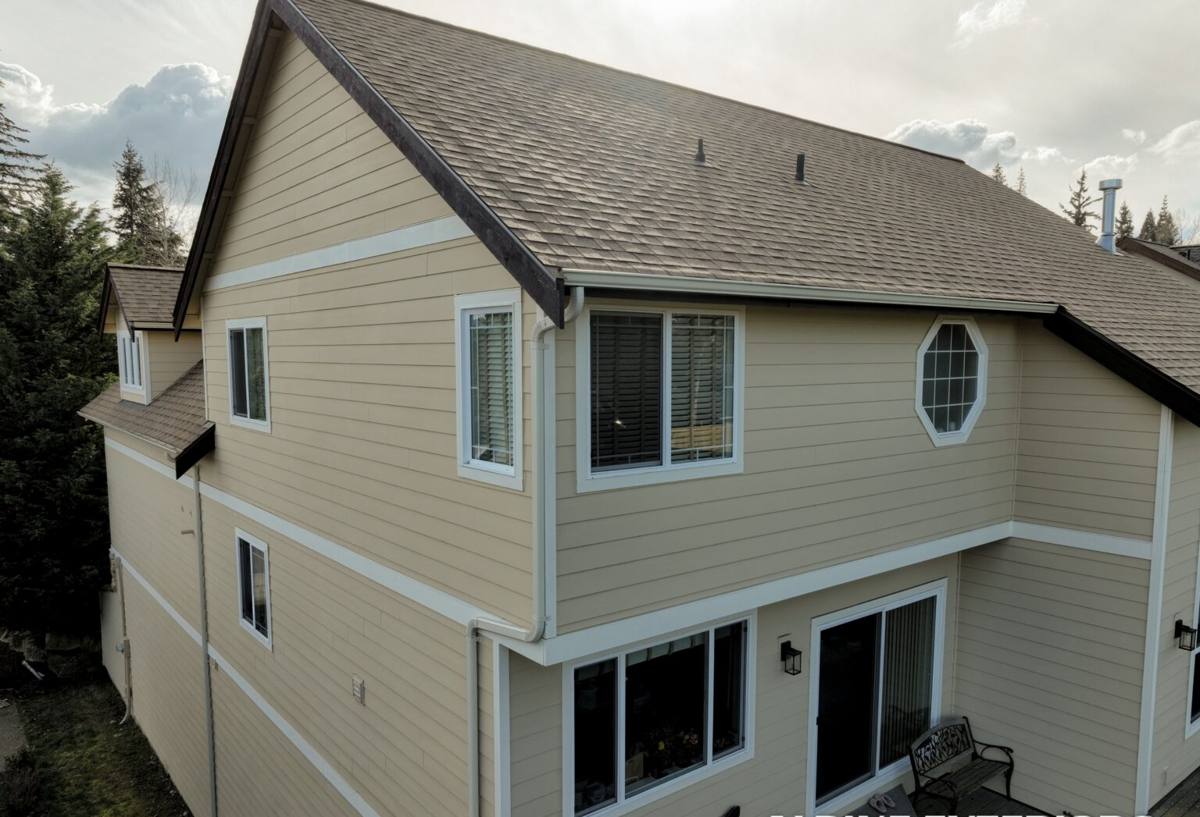
What Birchwood's Climate Does to a Roof
Salt Air and Corrosion
Homes closer to Bellingham Bay pick up a steady, low-level dose of salt-laden air, and that air is hard on unprotected metal. Flashing, fasteners, and vent components that aren't rated for coastal exposure corrode faster than the roofing material around them, and a corroded fastener or a pitted flashing seam is exactly where a small leak starts. It's a slow process, which is part of the problem — homeowners don't usually notice it until it's already caused damage.
Wind-Driven Rain and Roof Leaks
Rain in this part of Whatcom County often arrives sideways, pushed by wind off the water rather than falling straight down. That matters because it drives moisture into places a roof built for calmer weather doesn't defend as well — under shingle tabs, around vent pipes, into roof valleys, and behind poorly lapped flashing. A roof that would perform fine in a drier, calmer climate can leak here simply because the flashing details weren't built for wind-driven exposure.
A Long Moss and Algae Season
Mild temperatures and consistent moisture give moss and algae a growing season that stretches through most of the year, especially on shaded or north-facing roof planes. Moss isn't just a cosmetic problem — it holds water against the roofing surface, works under shingle edges as it spreads, and over time can lift and loosen roofing material that would otherwise still have years of life left in it.
Signs a Birchwood Roof Needs Replacement, Not a Repair
Not every roof problem calls for a full tear-off, but there's a point where patching starts costing more than it saves. These are the signs we take seriously when we're evaluating a Birchwood roof:
- Granule loss heavy enough that shingles look bald or patchy in multiple areas, not just one spot
- Shingles that are curling, cupping, or cracking across large sections of the roof
- Moss or algae growth that's spread beyond a shaded corner and covers a significant portion of the roof
- Soft or spongy spots in the roof deck, usually found from the attic side or during tear-off
- Daylight visible through the roof deck from inside the attic
- Repeated leaks in different locations rather than one recurring spot
- A roof that's at or past the manufacturer's rated lifespan for the material installed
- Flashing that's visibly corroded, separated, or was installed without proper step-flashing at walls and chimneys
One or two of these on their own might still be a repair. Several at once, especially combined with a roof already near the end of its rated life, usually means replacement is the more honest recommendation — and the more cost-effective one over time.
Roofing Materials for Birchwood Homes
There's no single right material for every roof — pitch, sun exposure, shade from surrounding trees, and budget all factor in. What matters is understanding how each option actually performs against salt air, wind-driven rain, and moss before deciding.
| Material | Salt Air & Moisture Behavior | Moss Resistance | Typical Lifespan Here |
|---|---|---|---|
| Architectural asphalt shingle | Performs well with corrosion-resistant flashing and fasteners | Good with moss-resistant granule options and proper airflow | 20-30 years |
| Standing seam metal | Excellent when finished and fastened for coastal exposure | Very good; smooth surface sheds moss buildup | 40-60 years |
| Cedar shake | Absorbs moisture readily; needs airflow underneath to dry out between rains | Requires regular treatment to control growth | 20-30 years with consistent upkeep |
| Composite/synthetic shingle | Resists moisture absorption well | Good; performance varies by product quality | 30-50 years depending on product |
We'll walk through which option actually fits your roof's pitch, sun exposure, and budget rather than steering you toward whatever's easiest to sell. A steep, sun-exposed roof in Birchwood and a low-slope roof shaded by mature trees don't call for the same answer, and we'll tell you why.
What a Correct Roof Replacement Actually Involves
Tear-Off and Deck Inspection
A proper replacement starts with a full tear-off down to the deck, not a layover on top of existing roofing. That's the only way to actually see the deck condition — soft spots, rot, or moisture damage that's been hiding under the old roofing don't show up until it's off. Any damaged decking gets replaced before anything new goes down; installing new roofing over a compromised deck just guarantees a shorter lifespan for the new material.
Underlayment and Ice-and-Water Shield
Synthetic underlayment goes down as the roof's first real moisture barrier, and we use ice-and-water shield at vulnerable areas — eaves, valleys, and roof-to-wall transitions — where wind-driven rain in this climate is most likely to get pushed underneath the roofing material itself.
Flashing at Every Transition
Flashing is where most roof leaks in this climate actually start, not the field of the roof itself. Step flashing at walls and chimneys, valley flashing, and vent flashing all get installed with corrosion-resistant materials suited to the salt-influenced air near the bay, and every transition gets proper overlap rather than relying on sealant to do the job flashing is supposed to do.
Ventilation
A roof deck that can't breathe traps moisture from below, which shortens the life of the roofing material from the inside out and can contribute to moss and mildew problems on the surface. Balanced intake and exhaust ventilation is part of a correct replacement, not an optional upgrade.
Our Roof Replacement Process in Birchwood
Inspection and Honest Estimate
We start with a full roof inspection — deck condition, flashing, ventilation, and how much of the existing damage is repairable versus not. You get a straightforward written estimate that explains what we found and why we're recommending what we're recommending, not a sales pitch built around urgency.
Material Selection and Scheduling
Once you've chosen a material, we schedule the work around Bellingham's weather patterns as much as we reasonably can, and we're upfront about how weather delays might affect timing on a tear-off project.
Installation Day
Tear-off, deck repair as needed, underlayment, flashing, new roofing, and ventilation all happen in sequence with the deck never left exposed longer than necessary given the forecast. We protect landscaping and gutters during the tear-off and haul away old material as part of the job.
Final Walkthrough and Cleanup
Before we consider the job done, we walk the property with you, answer questions about the finished roof, and do a magnetic sweep for stray nails and a full site cleanup. You should be able to look at the finished roof and understand exactly what was done and why.
Repair or Replace? How We Help You Decide
We don't default to recommending replacement just because it's the bigger job. We look at the roof's age relative to its rated life, how much of the surface is actually affected, whether the deck has moisture damage, and how many repairs the roof has already had. A localized leak on a roof that's otherwise sound is usually a straightforward repair. A roof nearing the end of its life with moss-related damage spread across multiple planes, or deck damage found during inspection, is more honestly addressed with a replacement than another round of patchwork that won't hold. We'll explain what we find and give you the real trade-offs, not whichever answer is more profitable for us.
Why a Crew That Already Works Birchwood Matters
A crew that works roofs across Bellingham and Whatcom County through every season sees how salt air, wind-driven rain, and moss actually behave on real houses over years — not just how a product performs on a spec sheet. That shows up in decisions that matter on install day: which roof orientations in a neighborhood like Birchwood need extra flashing attention because of tree shade or bay-facing exposure, how much ice-and-water shield a given roof actually needs, and which corrosion-resistant fasteners are worth the extra cost so you're not dealing with a callback in a few winters. It also means someone who understands the difference between exposure closer to the water and exposure further inland, rather than applying the same approach to every roof in the county.
Roofing Alongside Siding: The Full Exterior Picture
Bellingham Siding Company built its business on siding, and we install James Hardie fiber cement as our standard — chosen specifically for how it holds up against sustained coastal moisture compared to lower-cost alternatives that absorb water or need more frequent upkeep in this climate. That same standard for durability and correct installation carries over to how we approach roofing. If a roof replacement in Birchwood turns up moisture damage at a wall-to-roof transition or aging trim nearby, we can address the whole picture instead of sending you to find a second contractor for what's really one problem.
If your Birchwood roof is showing its age or you just want an honest read on how much life it has left, we're glad to take a look. Reach out using the form below for a free, no-pressure estimate.