 Bellingham Siding
 Deck Replacement for Birchwood's Climate
Birchwood homes deal with the same weather pattern the rest of Bellingham does: salt-tinged marine air moving in off Bellingham Bay, rain that gets pushed sideways as often as it falls straight down, and a moss and mildew season that runs long on shaded, north-facing surfaces. A deck sits outside in all of it, year-round, with no roofline or wall to soften the exposure. Over enough winters, that combination works on the framing, fasteners, and surface material in ways that eventually show up as a deck that's past the point of patching.
Replacing a deck is a different job than repairing one, and it's worth being clear about that distinction up front. A repair fixes what's broken and leaves the rest of the structure in place. A replacement means starting over from the ledger connection and footings up, which is the right call once the underlying structure has aged out or was never built to hold up to this climate in the first place. This page covers what a Birchwood deck replacement actually needs, what a correct job looks like from the ground up, and how our process works for a replacement in this part of Whatcom County.
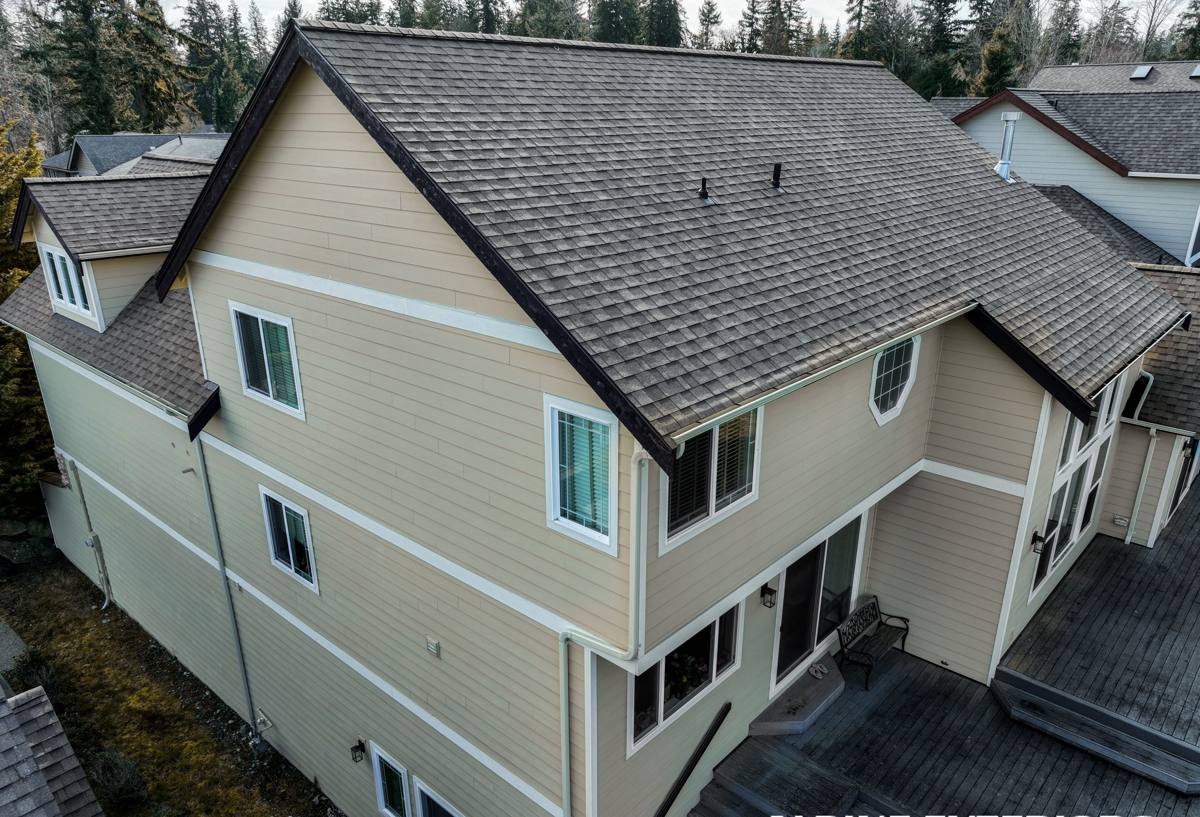
Signs a Deck Needs Replacing, Not Repairing
Homeowners often start out expecting a repair and end up needing a full replacement once an inspection gets underway, so it helps to know what usually tips a deck from one category into the other.
- Soft, spongy, or crumbling framing at multiple joists or posts, rather than one isolated spot
- A ledger board connection to the house that's shifted, gapped, or shows moisture staining behind it
- Widespread fastener corrosion — rust streaking around multiple screws or bolts, not just a few surface-level spots
- Footings that have settled, heaved, or no longer sit solidly on undisturbed ground
- A deck built years ago to an older code cycle, with railing height, baluster spacing, or guard design that wouldn't pass inspection today
- Surface boards that have been replaced piecemeal so many times that the deck is a patchwork of different ages and wear levels
- A structure that simply feels less solid underfoot than it used to — movement, bounce, or flex that's gotten worse over a season or two
One or two items on that list might point toward a targeted repair. Several at once, especially anything involving the ledger connection or footings, usually means the more honest and more cost-effective path over time is a full replacement rather than chasing problems section by section.
What Birchwood's Climate Does to an Aging Deck
Salt Air and Corroding Hardware
Marine air off Bellingham Bay carries enough salt to accelerate corrosion in exposed metal over time, and a deck's fasteners, joist hangers, and railing hardware sit right out in it with nothing shielding them. A fastener that's lost holding strength to rust doesn't look any different from the top of the deck until the board it's holding starts to lift or a railing post starts to flex. On an older deck built with standard-grade hardware instead of anything rated for coastal exposure, this is one of the most common reasons the structure ages out well before the visible decking does.
Driving Rain
Rain in this part of Whatcom County doesn't just fall straight down — wind pushes it sideways and up, forcing moisture under railings, into ledger connections, and between deck boards that were never gapped correctly to shed it. A deck built for calmer, drier conditions can look fine on a still day and still be taking on water at the ledger or around post bases every time a storm comes through with any real wind behind it.
A Long Moss Season
Mild temperatures and consistent dampness give moss a long growing season here, and horizontal deck surfaces are usually among the first places it takes hold, since they hold water longer than a vertical wall and stay damp between rain events. Shaded decks and north-facing surfaces show it first, and older wood or uncapped composite decking with any surface porosity gives moss something to grip onto year after year.
Choosing a Decking Material for the Replacement
A replacement is the natural point to reconsider decking material, since the whole surface is coming off anyway. The three main categories homeowners weigh are wood, capped composite, and cellular PVC, and the gap in performance between them matters more in this climate than it would somewhere drier.
Wood
Pressure-treated lumber and cedar remain popular for their look and lower material cost, but both need regular sealing or staining to hold up against sustained moisture, and both are more vulnerable to fastener corrosion issues in salt air over time. Left unmaintained even a season or two, wood is usually the first material in this climate to show moss, graying, and soft spots.
Capped Composite
Capped composite boards have a plastic shell around a wood-fiber composite core, which resists moisture absorption, staining, and UV fade far better than uncapped composite or wood. In a salt-air, high-moisture environment like Birchwood's, that cap layer is doing real work rather than just adding a marketing claim — it's the difference between a board that needs occasional washing and one that needs ongoing sealing to keep performing.
Cellular PVC
PVC decking contains no wood fiber at all, so it doesn't absorb moisture the way even capped composite can at cut edges or fastener holes. It typically costs more than composite and can flex a bit more under heavy point loads, but for a shaded, moisture-heavy deck location, some homeowners find the added moisture resistance worth the higher price point.
| Material | Handling Salt Air & Moisture | Moss Resistance | Upkeep |
|---|---|---|---|
| Cellular PVC | Excellent — no wood fiber to absorb moisture | Strong, smooth non-porous surface | Occasional washing |
| Capped composite | Strong — cap layer resists moisture and staining | Good on most product lines | Occasional washing |
| Uncapped composite | Moderate — some moisture absorption at exposed fiber | Fair; more prone to buildup over time | Periodic cleaning |
| Cedar | Moderate — natural resistance, but needs sealing | Fair when sealed and maintained | Regular oiling or sealing |
| Pressure-treated wood | Weak against sustained salt exposure over time | Poor without regular treatment | Regular sealing or staining |
What a Correct Replacement Involves
The surface material gets most of the attention when homeowners picture a new deck, but in this climate, what happens underneath is what actually determines how long the replacement lasts. A replacement done right starts at the ground and includes:
- New footings, poured or set correctly for the soil conditions on the lot, rather than reusing old footings that may have settled or shifted
- Framing material rated for sustained moisture exposure, sized correctly for the span and load the new deck will carry
- Stainless steel or coastal-grade corrosion-resistant fasteners and joist hangers throughout, not standard hardware that starts corroding within a few seasons
- Proper ledger board flashing where the deck ties into the house, since that connection is one of the most common failure points on decks built without it done correctly the first time
- Correct board gapping for drainage and material movement, so wind-driven rain and standing moisture can actually drain and dry between boards
- Hidden fastener systems on the surface where the decking product allows, reducing exposed metal and giving a cleaner walking surface
- Railing and guard design that meets current code, not whatever spacing or height the original deck happened to be built to years ago
- Ventilation and grading underneath the deck so moisture doesn't sit against the framing between storms
Skip any one of those and the new deck can still look great on day one. The shortcuts usually surface a few winters later, as a soft joist, a loosening railing post, or corrosion staining around fasteners that were never rated for this climate to begin with.
Permits and Code Updates on an Older Deck
A full replacement is also the point where an older deck gets brought up to current code, and that matters more than it sounds like on paper. Railing height and guard baluster spacing requirements have generally gotten stricter over the years, and a deck built decades ago may not meet what's required on a new build today. Footing depth and attachment methods have also evolved. Replacing the deck means the new structure is permitted and built to the current standard rather than grandfathered in on an old design. Whatcom County and the City of Bellingham generally require a permit for deck replacement work, and we handle that process as part of the job rather than leaving it for the homeowner to sort out separately.
Cost Factors Worth Understanding
Two replacement bids for what looks like the same deck can come in far apart, and the difference is almost always real scope rather than one contractor padding the number.
| Factor | What It Affects |
|---|---|
| Footing replacement vs. reuse | Whether the new deck sits on footings actually inspected and rated for the new structure's load |
| Framing material and fastener grade | How well the substructure resists salt-air corrosion and sustained moisture over time |
| Decking material | Upfront cost, moss and moisture resistance, and how much upkeep the surface needs going forward |
| Ledger flashing scope | How thoroughly the highest-risk connection point on the deck is protected against moisture |
| Railing and guard design | Whether the new structure meets current code requirements, not just the old deck's original spec |
| Size, height, and access | Labor time, staging needs, and complexity of the tear-out and rebuild |
A written estimate that breaks these out separately tells you more than a single lump-sum number. It's worth asking any contractor to walk through what's actually included before comparing two prices side by side.
How Our Process Works
- Site visit and assessment: We look at the existing deck's condition, the ledger connection, footings, drainage and grade, and sun and wind exposure through the day, rather than estimating from a description alone.
- Written estimate: You get an itemized bid covering demolition, footings, framing, fasteners, decking material, railing, and permitting, not one vague total.
- Permitting: We handle the permit application and inspections through the City of Bellingham or Whatcom County as part of the job.
- Demolition and disposal: The old deck comes down completely, including footings that need replacing, and material is hauled off site.
- Rebuild from the ground up: New footings, framing, ledger flashing, decking, and railing go in, each to the standard described above, in sequence.
- Final walkthrough: We review the finished deck with you and cover what your specific material actually needs going forward, which for most modern decking is minimal but not nothing.
What Your New Deck Still Needs From You
Even a correctly built replacement needs some routine attention in this climate to reach its full lifespan.
- Rinse or wash the deck surface periodically to clear salt residue and organic buildup before it works into the material
- Keep gaps between boards clear of leaves and debris so water and airflow can move through the way the design intends
- Check railing posts and visible hardware once a year for early corrosion or looseness, especially heading into the wet season
- Trim back overhanging branches or plants that hold moisture against the deck or block sun and airflow across the surface
- Address any soft framing or standing water underneath right away — that's a structural issue, not a cosmetic one
Why It Matters That We Already Work in Birchwood
A crew that mostly builds decks elsewhere can still put a competent structure together, but a Birchwood replacement has variables that come up more consistently here than in drier, more sheltered parts of the region — corrosion-grade fastener requirements from sustained salt exposure, drainage and ledger flashing details that have to account for wind-driven rain, and a moss season that runs longer than it does further inland. Working this area regularly means we already know which decking lines and hardware grades actually hold up to Bellingham's specific combination of salt air, driving rain, and moss, and which permit requirements apply to a Whatcom County replacement versus new construction.
It also means a more accurate estimate from the start, since the inspection accounts for how this climate actually behaves rather than applying a generic checklist to every job regardless of where it sits.
If your Birchwood deck is showing its age, or you'd just like an honest read on whether repair or full replacement makes more sense for your situation, we're glad to walk the site and lay out the options plainly. Reach out below for a free, no-pressure estimate.