 Bellingham Siding
 Why Birch Bay Is a Tough Place for Siding
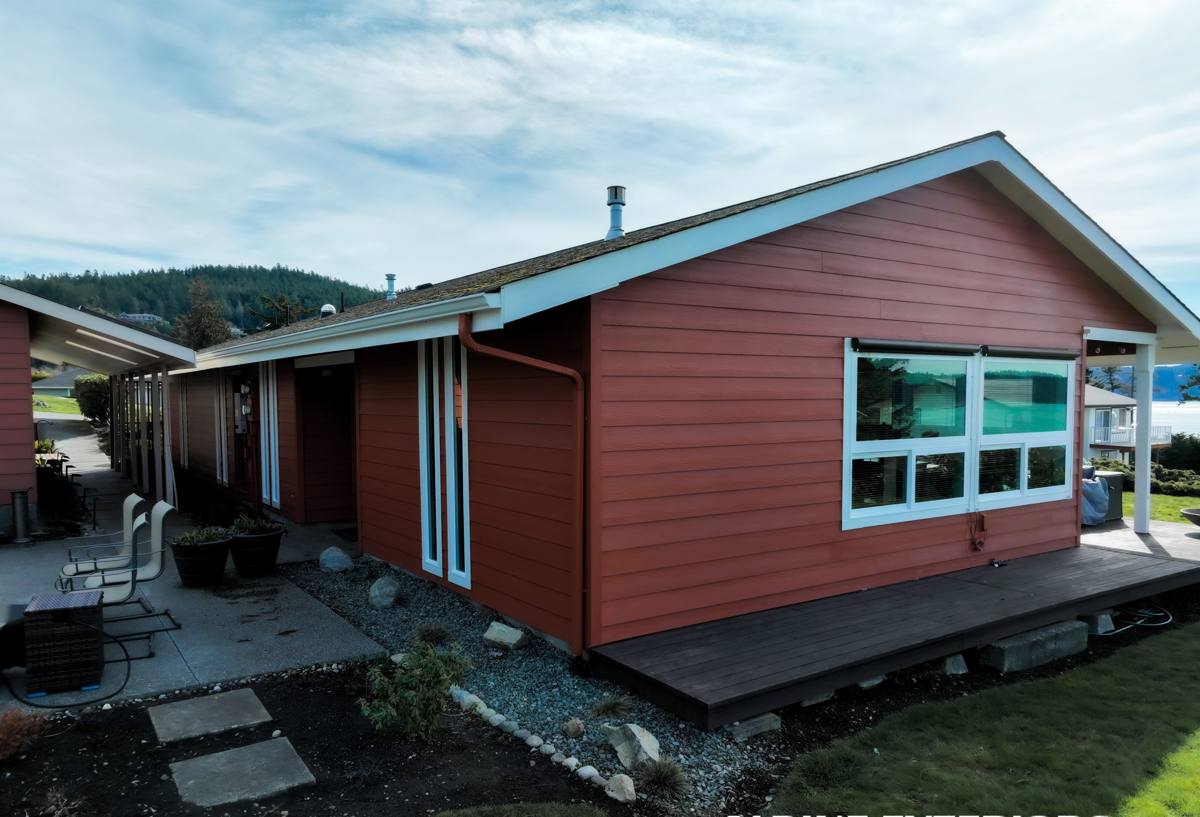
Birch Bay sits right on the water in Whatcom County, and that location cuts both ways. The same shoreline that makes it a great place to live also means homes here take on weather that inland Bellingham properties simply don't see as much of. Salt-laden air moves off the bay and settles on exterior surfaces year-round, driving rain comes in almost sideways during winter storms, and shaded, tree-lined lots hold moisture long enough to grow a steady crop of moss on roofs, trim, and siding. None of that is unusual for this stretch of the Pacific Northwest coast, but it does mean siding here ages differently than siding forty minutes inland.
Salt air is corrosive to fasteners and hard on paint film. Driving rain finds every gap in flashing and caulk that a calmer climate might forgive. And moss doesn't just look bad — it holds water against the siding surface and behind trim, which is exactly the kind of sustained moisture exposure that breaks down lesser materials over time. A siding replacement in Birch Bay has to be planned around these three factors specifically, not treated like a generic re-side job.
Signs a Birch Bay Home Needs Siding Replacement
Coastal exposure tends to show up in specific, recognizable ways. If you're seeing several of the following, it's worth having the siding looked at rather than just the paint:
- Soft, spongy, or crumbling spots when you press on the siding, especially near the bottom courses and around window sills
- Paint that's failing faster than it should, or a chalky residue that wipes off on your hand
- Persistent moss or dark streaking that comes back within a season or two of cleaning
- Visible gaps, warping, or buckling boards, particularly on walls that face the water or prevailing wind
- Rust staining around nail heads or fasteners
- A musty smell or soft drywall on the interior side of an exterior wall
Any one of these can sometimes be a localized repair. Several at once, especially on a home that's been through a decade or more of coastal weather, usually points to the underlying material reaching the end of what it can handle.
What a Correct Siding Replacement Actually Involves
Replacing siding is not just pulling off old boards and nailing up new ones. Done right, it's a system, and skipping steps is where most future problems start — especially in a climate like Birch Bay's where any weak point gets tested by weather almost immediately.
Tear-off and inspection
Once the old siding is off, the sheathing underneath gets inspected for rot, soft spots, or water staining. This is the point where hidden damage from years of moisture intrusion becomes visible, and it needs to be dealt with before anything new goes up — covering damaged sheathing with new siding just hides the problem for a few more years.
Weather-resistive barrier and flashing
A correctly installed weather-resistive barrier, properly lapped and taped, is what actually keeps driving rain out of the wall assembly. Flashing at windows, doors, and any place two materials meet needs to be integrated with that barrier in the right order — flashing behind the barrier at the top, over it at the bottom — so water sheds outward instead of working its way in.
Proper fastening and clearances
Fastener spacing, siding gaps at trim and corners, and clearance above rooflines, decks, and grade all matter more in a wet, salt-exposed environment than they would somewhere drier. Tight-to-grade siding or siding that's caulked shut with no room to shed water is a common shortcut that causes problems within a few years on the coast.
Finish and caulking
The final finish and joint sealing is what stands between the wall and the weather day to day. This is also where product choice matters most, because a factory-applied finish behaves very differently over time than a finish applied on site.
Why We Install Only James Hardie Fiber Cement
We don't install vinyl, LP SmartSide, primed wood, or cedar, and Birch Bay's climate is a good illustration of why. Vinyl can warp and become brittle with temperature swings and UV exposure, and its seams are a point of entry for wind-driven rain. Wood-based products — including engineered wood and primed spruce — rely on an intact factory or field-applied coating to keep moisture out, and once that coating is compromised by salt air or constant dampness, the wood substrate underneath is vulnerable to rot. Cedar is a beautiful natural material, but it needs ongoing maintenance to perform in a wet, shaded, moss-prone environment, and that maintenance burden only grows near the water.
James Hardie fiber cement is non-combustible and dimensionally stable, meaning it doesn't expand, contract, warp, or rot the way wood-based sidings can. Its ColorPlus factory finish is baked on under controlled conditions rather than applied on site, which gives it better adhesion and more consistent long-term color retention than field-applied paint — a real advantage in an environment where paint failure is common. Hardie also engineers specific product lines (HZ5 and similar) for climate zones, so the material specified for a coastal Pacific Northwest home is built for the moisture exposure it will actually face. Backed by a strong transferable warranty and a long track record when installed to manufacturer specification, it's the product we're willing to stand behind on homes exposed to salt air, driving rain, and moss season, year after year.
How Common Siding Options Hold Up on the Coast
| Factor | Vinyl | Wood / Engineered Wood | James Hardie Fiber Cement |
|---|---|---|---|
| Salt air resistance | Fair; can chalk and become brittle over time | Poor to fair; coating breakdown exposes substrate | Strong; non-combustible material, factory finish resists fading |
| Moisture / rot risk | Low material rot risk, but seams can let water behind it | Higher; wood substrate is vulnerable once coating fails | Very low when installed and finished to spec |
| Moss and mildew staining | Sits on surface, can be pressure washed with care | Can hold moisture, encouraging growth at joints | Dense material resists moisture retention at the surface |
| Maintenance burden | Low, but limited repair options once damaged | Regular recoating and caulk maintenance required | Low; factory finish extends time between repaints |
| Typical expectation with proper install | 20-30 years | Varies widely with maintenance | Decades of service with a strong transferable warranty |
Our Process for a Birch Bay Siding Replacement
- On-site assessment — we walk the home, check exposure on each elevation (water-facing walls typically take the most weather), and look for existing moisture damage.
- Scope and product selection — we specify the right Hardie product and profile for the home's exposure and style, and lay out what tear-off will involve.
- Written estimate — a clear, itemized proposal so you know what's included before any work starts.
- Tear-off and sheathing inspection — old material comes off and the wall underneath gets checked and repaired as needed.
- Weather barrier and flashing installation — the part of the job that does the most work keeping driving rain out, done to manufacturer and code detail.
- Hardie installation — fastened and gapped to specification, with attention to clearances at grade, decks, and rooflines.
- Final walkthrough — we go over the finished work with you before calling the job complete.
Cost Factors for Siding Replacement in Birch Bay
Every home is different, so we don't post fixed prices, but the same factors drive cost on most jobs in this area:
| Factor | Why it matters |
|---|---|
| Home size and number of stories | More surface area and more difficult access both add labor time |
| Condition of existing sheathing | Rot repair discovered during tear-off adds material and labor |
| Water-facing exposure | Elevations that take direct wind-driven rain may need extra flashing detail |
| Trim and detail work | Corners, window and door surrounds, and architectural detail add time |
| Product line and finish selection | Different Hardie profiles and ColorPlus finishes carry different material costs |
Why Local Experience in Birch Bay Matters
A crew that's worked this stretch of Whatcom County coastline knows which elevations on a Birch Bay home tend to take the worst of the weather, how much moss buildup to expect between visits, and where salt air tends to cause the earliest wear. That's not something you can fully judge from a single walk-around — it comes from having actually replaced siding on homes exposed to this exact combination of wind, rain, and moisture. It also means we're a known, reachable local business if a question comes up after the job is done, not a crew that worked the area for one project and moved on.
If your Birch Bay home is showing signs of wear from salt air, driving rain, or moss, we're happy to take a look and give you a straightforward, no-pressure estimate — free, with no obligation. Use the form below to get started.