 Bellingham Siding
 Roofing on the Water: What Birch Bay Asks of a Shingle Roof
Birch Bay sits right on the Strait of Georgia, and that location shapes everything about how a roof ages here. Homes close to the water take on salt-laden air that speeds up corrosion on anything metal, while the open shoreline gives wind a clean run at rooflines with far less tree buffering than you'd find further inland in Whatcom County. Add in the long, wet Pacific Northwest fall and winter, and you have a climate that tests every layer of a roofing system, not just the shingles on top.
An asphalt shingle roof can absolutely hold up well in Birch Bay, but only when it's specified and installed with this exposure in mind. A roof built to a generic standard, without accounting for wind uplift, moisture cycling, and moss pressure, tends to show its age years before it should.
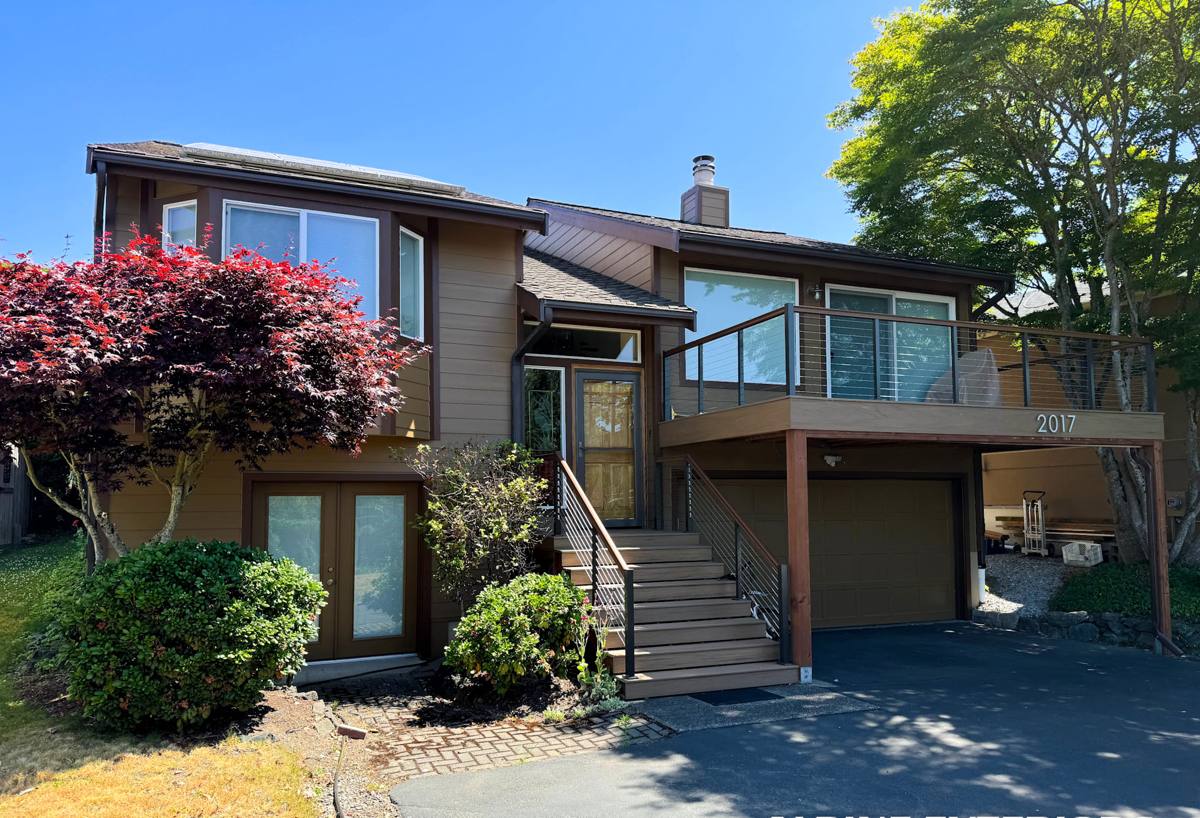
Salt Air, Wind, and Moss: The Three Things That Wear Out a Roof Here
Salt Air and Corrosion
Salt in the air settles on flashing, fasteners, vents, and any exposed metal, accelerating rust and corrosion compared to the same materials a few miles inland. Once flashing starts to corrode, it can fail quietly at seams and valleys long before the shingles themselves show any wear, letting water in where you'd least expect it.
Wind Off the Water
Birch Bay's shoreline exposure means fewer windbreaks and more direct gusts than a typical Bellingham neighborhood a few miles inland. Shingles rated for lower wind speeds, or shingles installed with under-driven or over-driven fasteners, are far more likely to lift at the tabs and edges during a winter storm.
The Long Moss Season
Whatcom County's damp, shaded winters give moss and algae a long window to take hold, and a roof facing north or shaded by mature trees can stay damp for days after a storm. Moss doesn't just look bad — it holds moisture against the shingle surface, works its way under tabs, and can lift shingles enough to let water travel where it shouldn't.
What a Correctly Built Shingle Roof Includes Here
A roof that's going to perform well in this environment isn't just about which shingle you pick. It's a system, and every layer matters.
- Corrosion-resistant flashing and fasteners at valleys, chimneys, skylights, and roof-to-wall transitions, chosen with salt exposure in mind rather than the cheapest available option.
- A wind-rated shingle appropriate for the property's exposure, installed with the fastener pattern and nail placement the manufacturer specifies — not just "close enough."
- A quality synthetic or self-adhered underlayment as a true second line of defense, since no shingle roof is 100% watertight in wind-driven rain.
- Ice-and-water shield at vulnerable areas — eaves, valleys, and penetrations — where wind-driven rain is most likely to work backward under shingles.
- Balanced attic ventilation so moisture from inside the home doesn't condense against the roof deck, which shortens the life of both the decking and the shingles above it.
- Proper starter strip and drip edge at eaves and rakes, which is one of the most common places we find corners cut on older installs.
Common Problems We Find on Birch Bay Roofs
When we inspect an older asphalt shingle roof in this area, a handful of issues show up again and again:
- Moss buildup at north-facing slopes and valleys, sometimes with shingle tabs already lifted underneath it
- Corroded or undersized flashing at chimneys and sidewalls, often original to the house
- Granule loss and shingle curling on roofs that are past their practical service life but still watertight enough to hide the problem
- Wind-lifted or cracked tabs along exposed eaves and ridgelines facing the water
- Attic condensation staining on the underside of the deck, pointing to inadequate ventilation rather than a shingle failure
Most of these are manageable if caught early, which is why a straightforward inspection is worth doing before small issues turn into a full deck repair.
Shingle Options and How They Hold Up in This Climate
Not every asphalt shingle product performs the same way in a coastal, moss-prone environment. Here's how the common tiers generally compare — actual pricing depends on roof size, pitch, and access, so treat the figures below as a general starting point for conversation, not a quote.
| Shingle Type | Typical Lifespan | Wind Rating | Moss/Algae Resistance | Relative Cost |
|---|---|---|---|---|
| Standard 3-tab | Shorter end of the range | Lower | Standard, no built-in resistance | Lowest |
| Architectural/laminate | Mid to upper range | Moderate to high, depending on line | Available with algae-resistant granules | Moderate |
| Premium/impact-rated laminate | Upper range | High | Algae-resistant options standard on most lines | Higher |
For a shoreline property like most homes in Birch Bay, we generally steer homeowners toward an architectural shingle with algae-resistant (copper- or zinc-infused) granules and a wind rating that matches the site's actual exposure. It costs more up front than a basic 3-tab, but it's a better match for the conditions the roof will actually face.
A Note on Moss-Resistant Granules
Algae- and moss-resistant granules slow regrowth, they don't prevent it entirely. A shaded, north-facing roof in Birch Bay will still need periodic cleaning and moss treatment even with the better granule package — it just buys you more time between maintenance visits.
Our Asphalt Shingle Roofing Process
Whether it's a full replacement or a targeted repair, we approach every Birch Bay roof the same way:
- Inspection and assessment. We look at the whole system — shingles, flashing, ventilation, and the deck underneath — not just the surface.
- Honest scope of work. We tell you what actually needs to happen: repair, partial re-roof, or full replacement, along with the reasoning behind that recommendation.
- Tear-off and deck check. On a full replacement, we remove old material down to the deck and repair or replace any soft or water-damaged sheathing before anything new goes down.
- Underlayment and flashing first. The water-management layers go in correctly before a single shingle is nailed, since this is where most long-term leaks actually originate.
- Shingle installation to spec. Correct nail count, placement, and exposure — the details that determine whether a roof survives its first real coastal windstorm.
- Ventilation check. We confirm intake and exhaust venting are balanced for the attic space, adjusting where needed rather than leaving an undersized system in place.
- Cleanup and walk-through. Site cleared of debris and nails, with a final look at the finished roof together.
Maintenance That Matters in a Marine, Mossy Climate
A well-built shingle roof in Birch Bay still needs some seasonal attention to reach its full lifespan. A quick self-check twice a year, especially after fall storms and before the wettest part of winter, catches most problems while they're still small.
- Look for moss or dark streaking on north-facing slopes and valleys
- Check that gutters and downspouts are clear so water isn't backing up under the eaves
- Watch for lifted, cracked, or missing tabs after high-wind events
- Keep overhanging branches trimmed back to reduce shade, debris, and moss pressure
- Have flashing at chimneys, skylights, and sidewalls checked periodically for corrosion, especially on homes closest to the water
- Address small leaks or soft spots right away — moisture trapped under shingles does more damage the longer it sits
Why It Matters to Hire a Crew That Already Works This Area
Roofing crews who mostly work drier, more sheltered parts of the county don't always account for what a Birch Bay property actually faces — the wind exposure, the salt air, the moss season that runs longer than it does even a few miles inland. That shows up later as flashing chosen without corrosion in mind, ventilation that doesn't account for how damp the air stays here, or a shingle wind rating that's fine for an inland lot but marginal on an open shoreline.
Working in Whatcom County day in and day out means we're already accounting for these conditions before we ever get on the roof — in the materials we recommend, the flashing details we insist on, and the maintenance guidance we give afterward. That local familiarity is worth as much as the shingle brand on the invoice.
Get a Straightforward Look at Your Roof
If your Birch Bay roof is showing moss, missing granules, lifted tabs, or you're just not sure how much life is left in it, we're happy to take a look and give you an honest read on where things stand. Reach out for a free, no-pressure estimate — the form below gets it started.