 Bellingham Siding
 Why Barkley Roofs Take a Different Kind of Beating
Barkley is one of Bellingham's more established planned neighborhoods, with a mix of home ages and roof types packed into a relatively small area. What most of those roofs have in common is exposure to the same set of conditions that make Whatcom County roofing its own specialty: salt-laden air rolling in off Bellingham Bay, long stretches of driving rain that come in sideways more often than straight down, and a moss season that can run nine months out of the year on shaded, north-facing slopes.
None of that is exotic weather. It's steady, unglamorous wear — the kind that doesn't show up as storm damage but instead shows up ten or fifteen years later as granule loss, soft decking, or a roof that's lost its ability to shed water the way it used to. A roof replacement done right in Barkley isn't just about swapping old shingles for new ones. It's about building back in the protection this specific climate demands, in the places a standard install often skips.
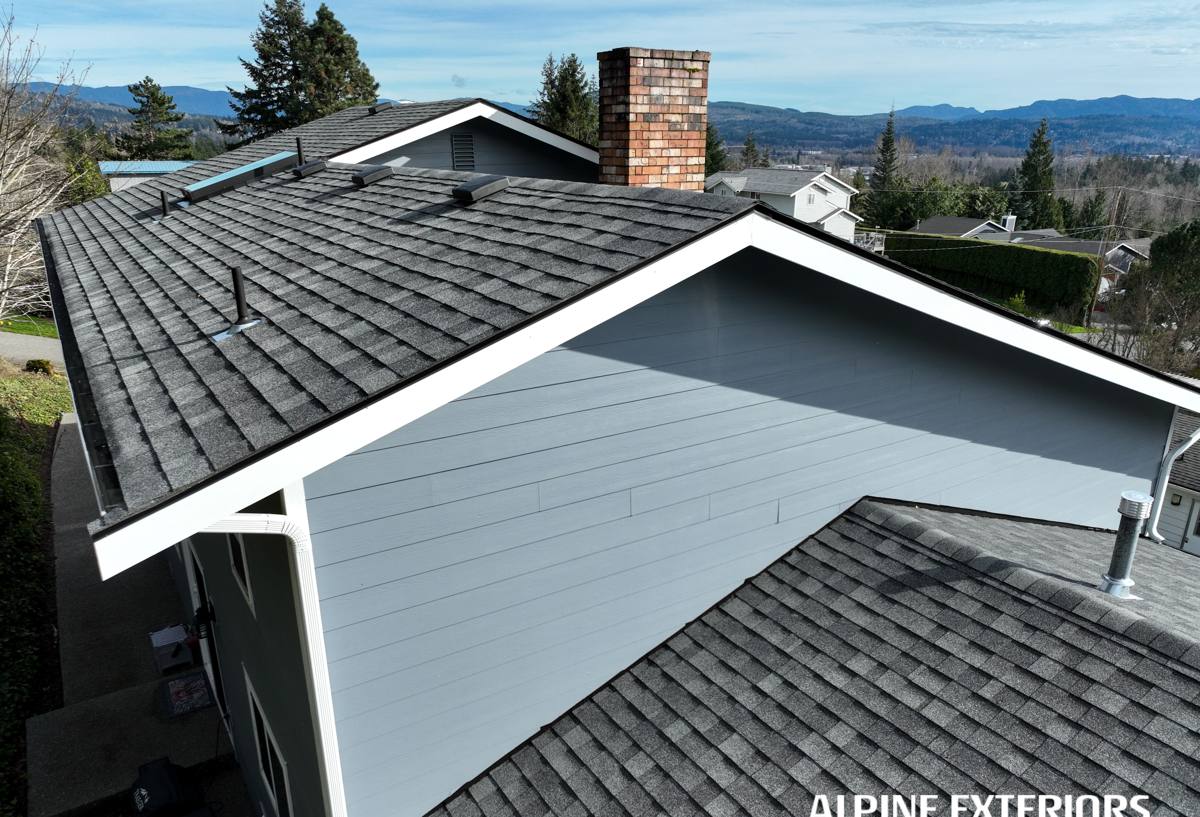
Signs Your Barkley Home Is Telling You It's Time
Most homeowners don't wake up one day and decide to replace a roof — they get there gradually, usually after a few of these signs stack up. If you're seeing more than one of the following, it's worth having someone take a look before the next wet season:
- Shingles that are cupping, curling at the edges, or missing granules in patches
- Moss or dark streaking that keeps coming back within a season or two of cleaning
- Daylight visible through the attic roof deck, or damp insulation after heavy rain
- Soft or spongy spots when walking the roof, especially near valleys and chimneys
- Granules collecting in gutters and downspouts
- A roof that's 20+ years old and has never had underlayment or ventilation upgraded
- Interior ceiling stains, especially ones that appear or worsen during storms
Any one of these on its own might just call for a repair. Several together, or a roof already near the end of its expected lifespan, usually means replacement is the more honest recommendation — repeated patch repairs on an aging roof tend to cost more over time than doing the job once, correctly.
What a Correct Roof Replacement Actually Involves
A roof replacement is more than the visible shingle layer. In a climate like ours, what happens underneath the surface materials matters just as much as the materials themselves.
Tear-Off and Deck Inspection
We remove the old roofing down to the deck rather than layering new shingles over old — layering traps moisture and hides deck problems that will eventually need to be dealt with anyway. Once the deck is exposed, we check it for soft spots, delamination, or rot, particularly around valleys, chimneys, and skylights where water tends to linger longest. Any damaged decking gets replaced before anything new goes down.
Underlayment and Ice-and-Water Protection
Underlayment is the roof's backup layer, and it's where a lot of corner-cutting happens on cheaper jobs. In a region with as much sustained rainfall as Whatcom County sees, we pay particular attention to self-adhered ice-and-water membrane at eaves, valleys, and roof penetrations — the spots most likely to see wind-driven rain work its way backward under the shingles.
Ventilation
A roof that can't breathe traps moisture in the attic, and trapped moisture accelerates rot, feeds mold, and shortens the life of the very shingles you just paid to install. Balanced intake and exhaust ventilation is one of the most overlooked parts of a roof replacement, and it's one we always evaluate rather than assume is already adequate.
Flashing and Penetrations
Chimneys, plumbing vents, skylights, and wall-to-roof transitions are where the majority of leaks actually originate — not in the open field of shingles. Flashing gets replaced, not reused, and sealed with materials suited to holding up under repeated wet-dry cycling rather than drying out and cracking within a few seasons.
Choosing a Roofing Material That Can Handle Whatcom County Weather
There's no single "best" roofing material for Barkley — the right choice depends on your roof's slope, sun exposure, tree cover, and budget. Here's how the common options generally compare under our conditions:
| Material | Moss/Moisture Resistance | Typical Lifespan | Maintenance Needs |
|---|---|---|---|
| Standard 3-tab asphalt shingle | Fair; relies on algae-resistant granules | 15-20 years | Periodic moss and debris removal |
| Architectural (dimensional) shingle | Good; thicker profile sheds water more effectively | 25-30 years | Occasional moss treatment on shaded slopes |
| Standing seam metal | Very good; smooth surface resists moss anchoring | 40-50+ years | Low; periodic fastener and sealant checks |
| Cedar shake | Poor without diligent upkeep in wet, shaded areas | 20-30 years with maintenance | High; regular treatment against moisture and moss |
We don't push cedar shake on shaded Barkley lots as a rule, not because it can't look good, but because untreated wood shingles in a climate this consistently damp demand a level of ongoing maintenance most homeowners underestimate when they're pricing the job. Asphalt architectural shingles remain the most common, cost-effective choice for the area; metal roofing is worth a serious look for anyone planning to stay in the home long term or dealing with a steep, heavily shaded roof plane.
Moss, Algae, and the Long Game
Moss doesn't just look bad — it holds moisture against the shingle surface, works its way under tabs as it grows, and can lift shingles enough to let water in underneath. On a new roof, the goal is to make moss growth slower and easier to manage, not to pretend it won't happen at all in a climate this wet and shaded.
A few things make a real difference over the life of the roof:
- Zinc or copper control strips installed near the ridge, which release trace metals that inhibit moss growth as rain washes over the roof
- Keeping overhanging branches trimmed back to reduce shade and debris buildup
- Clearing gutters and valleys at least twice a year so water has somewhere to go
- Gentle, low-pressure moss removal rather than pressure washing, which can strip granules and shorten shingle life
None of this eliminates moss forever, but it stretches the time between treatments considerably and protects the investment you just made in a new roof.
Cost Factors for a Barkley Roof Replacement
Every roof is priced individually, but the same handful of factors drive most of the variation we see on Barkley homes:
| Factor | Why It Matters |
|---|---|
| Roof size and number of layers to remove | More tear-off labor and disposal, especially with existing layered roofing |
| Roof pitch and complexity | Steep or cut-up roofs with multiple valleys and planes take longer and require more safety setup |
| Deck condition | Rotted or soft decking found during tear-off adds material and labor to replace it properly |
| Material choice | Standard asphalt, architectural shingle, and metal carry different material and installation costs |
| Ventilation and flashing upgrades | Bringing an older roof's airflow and flashing up to current standards adds work but pays off in longevity |
We give a written, itemized estimate before any work starts, so you know exactly what you're paying for and why — not a lump number with no breakdown behind it.
Our Roof Replacement Process, Start to Finish
- On-site inspection. We walk the roof and attic, check the deck where accessible, and talk through what we're seeing with you directly.
- Written estimate. A detailed quote covering materials, labor, and any deck or ventilation work we expect to encounter.
- Scheduling around the weather. We plan install windows with Whatcom County's rain patterns in mind and cover exposed areas if conditions shift mid-project.
- Tear-off and deck repair. Old roofing comes off, the deck gets inspected and repaired as needed, before anything new is installed.
- Underlayment, flashing, and shingle installation. Each layer goes down in the order and manner it's designed to work.
- Site cleanup. Magnetic sweep for nails, hauling of old material, and a final walkthrough with you.
- Final inspection. We confirm the finished roof meets both manufacturer specifications and our own standards before calling the job complete.
Why a Crew That Already Works in Barkley Makes a Difference
Every neighborhood in Bellingham has its own quirks, and Barkley is no exception. A crew that's already worked roofs in the area knows what shaded, moss-prone slopes tend to look like a decade in, understands the permitting expectations for the city of Bellingham, and — if your property falls under a homeowners association or planned-development design standard — knows to check on that before materials get ordered, not after. That familiarity translates into fewer surprises mid-project and a roof that's built for the conditions it will actually face, not a generic install pulled from a national playbook.
It also means faster response if something needs a follow-up look after a big windstorm or an unusually wet stretch. We're not driving in from out of the area to get to you.
Warranty and Caring for Your New Roof
A roof replacement should come with clear coverage on both materials and workmanship, and you should understand what's covered by the manufacturer versus what's covered by the installer before you sign anything. We walk every homeowner through that distinction so there's no confusion later if a question comes up.
After installation, a new roof still benefits from basic seasonal attention: clearing gutters and valleys before the fall rains set in, keeping an eye on moss growth as the shaded parts of the roof age, and having it looked at after any major storm. A well-installed roof in this climate can go decades with only that kind of light, routine care.
If your Barkley roof is showing its age or you just want an honest opinion on where it stands, we're happy to take a look. Fill out the form below for a free, no-pressure estimate — we'll tell you what we actually see, not just what sells a job.