 Bellingham Siding
 Fairhaven's Roofs Work Harder Than Most
Fairhaven sits close enough to the water that salt-laden air is a near-constant presence on roofing materials, gutters, and flashing. Add in the driving, wind-pushed rain that comes through Bellingham off the Salish Sea, plus a moss season that can run eight months or longer in shaded, tree-covered lots, and you have a combination that ages an asphalt shingle roof faster than it would age in a drier, inland climate. None of that means asphalt shingles are the wrong choice for Fairhaven — they're still one of the most practical, cost-effective roofing systems available. It means the installation has to be done with this specific environment in mind, not treated as a generic job.
A roof that's correct for a subdivision in eastern Washington isn't automatically correct here. The underlayment, ventilation, fastening pattern, and edge details all need to account for sustained moisture exposure and the salt content in the air. That's the difference between a roof that looks fine for a couple of years and one that actually holds up through a full Whatcom County winter.
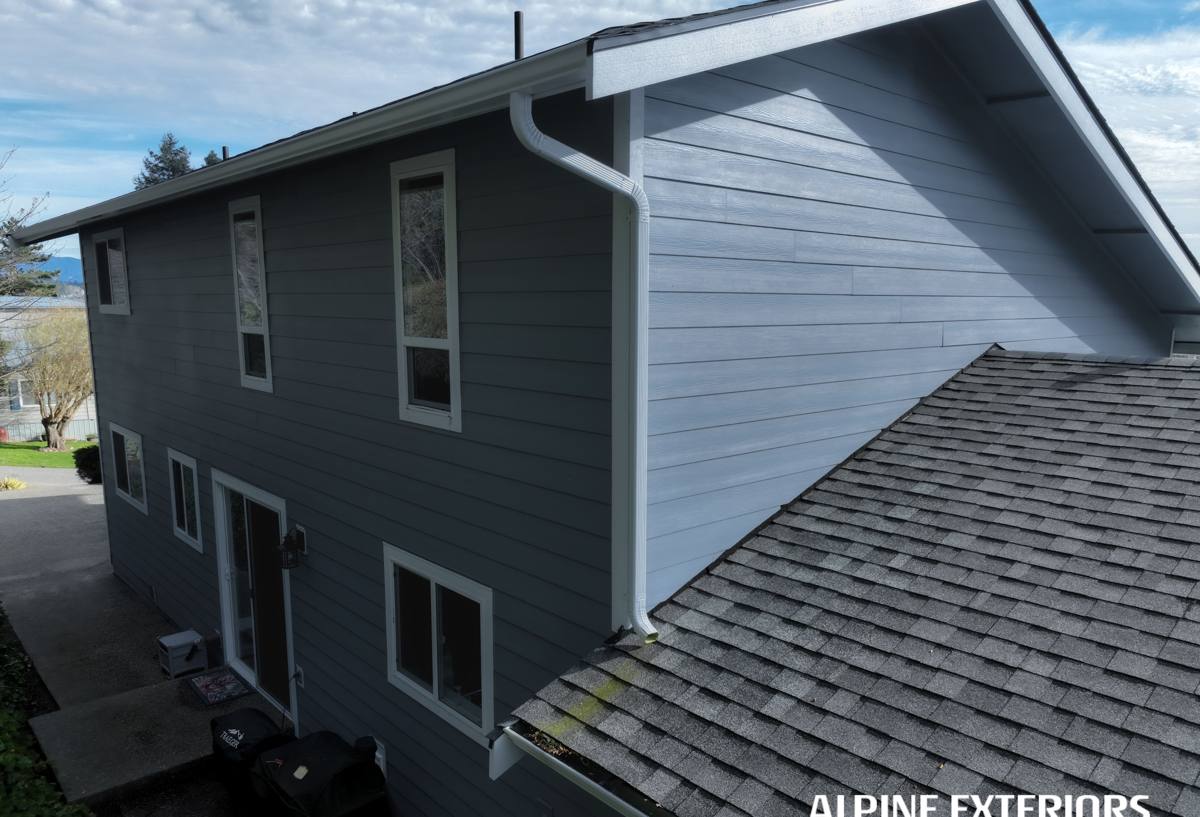
What Salt Air and Moisture Actually Do to a Shingle Roof
Salt Air
Airborne salt doesn't just sit on the surface — over time it accelerates corrosion on exposed metal components: nail heads, flashing, drip edge, and vent housings. Once a fastener starts to corrode, it loses holding power, and a shingle that isn't fully secured is far more likely to lift in wind or let water track underneath it. This is why fastener and flashing material selection matters more for a Fairhaven roof than it would a few miles inland.
Driving Rain
Wind-driven rain doesn't fall straight down — it gets pushed sideways and upward under shingle edges, around chimneys, and along valleys. A roof built for light, vertical rainfall can perform poorly here because water finds its way past standard laps and seals. Proper underlayment coverage and sealed penetrations aren't optional upgrades in this climate; they're the baseline.
Moss
Moss thrives in shaded, moisture-retentive conditions, and a lot of Fairhaven's tree cover creates exactly that environment. Moss holds water against the shingle surface long after the rest of the roof has dried, which shortens the life of the granule surface and can work shingle tabs loose over time. Left unmanaged, it also creeps under shingle edges and into valleys, which is where leaks tend to start.
What a Correctly Installed Roof Needs Here
Underlayment
A synthetic underlayment with strong water resistance, properly lapped and fastened, is the first real line of defense once wind-driven rain gets past the shingle surface. In vulnerable zones — eaves, valleys, and around penetrations — self-adhering ice-and-water membrane adds a second layer of protection that ordinary underlayment doesn't provide.
Ventilation
Balanced intake and exhaust ventilation keeps the underside of the roof deck dry and at a consistent temperature. Without it, trapped moisture condenses in the attic space, which can rot decking and shorten shingle life from underneath — a failure mode that has nothing to do with the shingle brand and everything to do with airflow.
Flashing and Edge Details
Chimneys, skylights, sidewalls, and roof-to-wall transitions are where the vast majority of leaks originate — not the open field of shingles. Flashing needs to be properly stepped, counter-flashed, and sealed with materials that won't corrode quickly in salt air. This is detail work that separates a roof that's watertight from one that only looks finished.
Fastening
Correct nail placement — count, location, and depth — keeps shingles rated for their full wind speed. Overdriven or underdriven nails are one of the most common causes of premature shingle failure, and it's a detail that's invisible once the roof is finished unless you know what you're looking at during installation.
Choosing a Shingle for This Environment
Not every asphalt shingle product performs the same way under sustained moisture and moss exposure. The table below outlines general trade-offs to think through — actual product availability and warranty terms vary by manufacturer and should be confirmed at the estimate.
| Shingle Type | Typical Lifespan | Moss/Algae Resistance | Best Fit For |
|---|---|---|---|
| 3-Tab Shingles | Shorter end of the asphalt range | Standard, unless algae-resistant granules are specified | Budget-conscious projects, secondary structures |
| Architectural (Dimensional) Shingles | Mid-to-long range | Often available with algae-resistant granule options | Most Fairhaven homes — better wind rating and shadow-line durability |
| Premium/Designer Shingles | Longer end of the asphalt range | Typically includes enhanced algae-resistant granules | Homes prioritizing longevity and a heavier, dimensional look |
For most Fairhaven properties, architectural shingles with algae-resistant granules strike the right balance — better wind performance than 3-tab shingles, and granule technology that slows moss and algae growth compared to standard surfaces. We'll walk through the realistic options for your roof's pitch, shade exposure, and budget rather than pushing a single product on every job.
Signs a Fairhaven Roof Needs Attention
- Visible moss growth along shading lines, valleys, or the north-facing slope
- Granules collecting in gutters or at downspout outlets
- Curling, cupping, or lifted shingle edges, especially near the eaves
- Dark streaking that doesn't wash off with light rain
- Soft spots or sagging when walked (a sign of deck moisture damage)
- Rust staining around flashing, vents, or exposed nail heads
- Daylight visible through the attic decking or musty attic odor
- Shingles missing or displaced after a windstorm
Any one of these on its own isn't necessarily an emergency, but they're worth a professional look before the next wet season adds to the problem.
How We Approach a Fairhaven Roofing Project
Inspection and Estimate
We start by getting on the roof, not just looking at it from the ground. That means checking the deck condition, ventilation setup, flashing details, and the extent of any moss or moisture damage before recommending a scope of work.
Tear-Off and Deck Check
A full tear-off lets us inspect the decking underneath — something a shingle-over installation can't do. Any soft or water-damaged decking gets replaced before new material goes down, because new shingles over a compromised deck is a short-term fix, not a real repair.
Installation
Underlayment, ice-and-water membrane at vulnerable zones, proper flashing, correct nailing, and balanced ventilation go in as a system — each component supports the others. We don't treat any one of these as optional to hit a lower price.
Cleanup and Walkthrough
We clear debris and fasteners from the property and walk the finished roof with you so you know what was done and why, including any maintenance recommendations specific to your lot's shade and moisture exposure.
Moss Management After the Roof Is Installed
A new roof reduces moss risk with algae-resistant shingles and clean, sealed edges, but no shingle roof in a shaded, coastal-influenced climate like this one is entirely maintenance-free. Periodic gentle cleaning — never pressure washing, which strips granules and shortens shingle life — along with keeping overhanging branches trimmed back to let light and air reach the roof surface, goes a long way toward protecting the investment. Zinc or copper strips near the ridge are another option some homeowners choose to slow regrowth over time.
What Drives Cost on a Fairhaven Roofing Project
| Factor | Why It Matters |
|---|---|
| Roof size and pitch | More surface area and steeper pitches mean more material and labor, plus added safety measures |
| Number of penetrations | Chimneys, skylights, and vents each require individual flashing work |
| Deck condition | Rotted or moisture-damaged decking found during tear-off adds material and labor to replace it |
| Shingle tier selected | 3-tab, architectural, and premium products carry different material costs and warranty lengths |
| Ventilation upgrades | Adding or correcting intake/exhaust ventilation protects the new roof from the inside out |
| Access and site conditions | Tree cover, tight lots, or difficult roof access can affect labor time |
Costs for a full asphalt shingle roof replacement typically run into the thousands to low tens of thousands of dollars depending on these factors — we'll give you a specific number in writing after an on-roof inspection, not a ballpark over the phone.
Why It Matters That We Already Work in Fairhaven
A crew that regularly works in Fairhaven and the surrounding Bellingham area already understands how salt exposure, tree cover, and driving rain behave on roofs in this specific setting — knowledge that doesn't come from a generic installation checklist. We know which details tend to fail first in this climate and build the installation to address them from the start, rather than treating every roof the same way regardless of where it sits in Whatcom County.
If you're seeing early signs of wear, dealing with recurring moss, or simply planning ahead for a roof that's approaching the end of its service life, we're happy to take a look. Reach out for a free, no-pressure estimate using the form below — we'll assess your roof honestly and lay out real options, not a one-size-fits-all recommendation.