 Bellingham Siding
 Roofing a Shaded, Wet Neighborhood Like Sudden Valley
Sudden Valley sits under heavy tree canopy along Lake Whatcom, and that setting is exactly what makes roofing here different from a roof job on an open lot closer to downtown Bellingham. Tall conifers hold shade over large sections of most roofs for much of the day, which slows drying after every rain. Add in Whatcom County's long, wet stretch from fall through spring, and you get roofs that stay damp longer than they should — the single biggest reason asphalt shingles wear out early in this area.
The broader marine climate that shapes this whole region, from the salt air near Bellingham's waterfront to the steady driving rain further inland, keeps humidity high across Whatcom County for most of the year. In Sudden Valley, that moisture gets trapped by tree cover and slow airflow around the lake basin, which is why moss and algae growth shows up faster and heavier here than on roofs in more open, sun-exposed parts of town. A roof built for this neighborhood has to account for that from the design stage, not just get patched for it later.
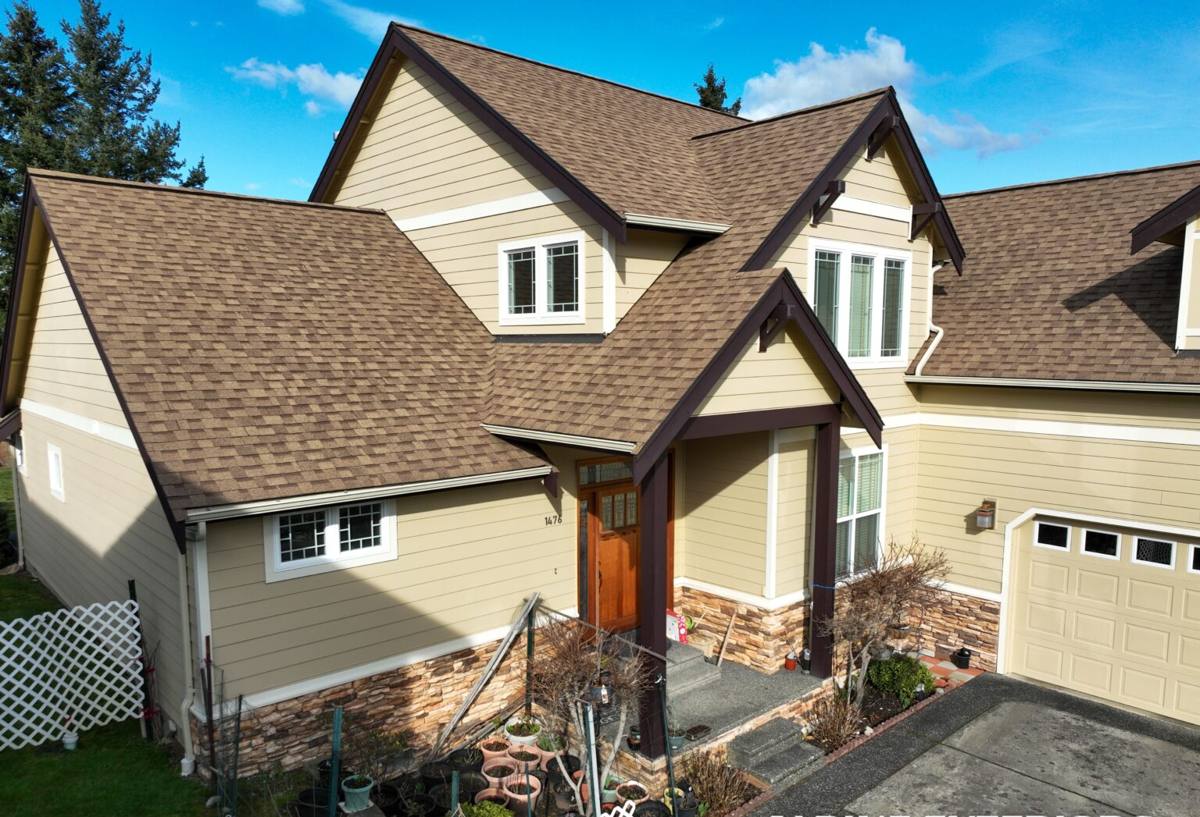
What Moss and Shade Actually Do to a Shingle Roof
Moss doesn't just look bad. As it establishes on a shingle, it holds water against the granule surface around the clock instead of letting the roof dry between rains. Over time that constant moisture works granules loose, softens the mat underneath, and lifts shingle edges — which is when wind and rain start getting underneath rather than running off. Needle litter and leaf debris from the surrounding trees compound the problem by damming water in valleys and along eaves, exactly where a roof needs to shed water fastest.
None of this happens overnight. It's a slow, cumulative process, which is also why it's easy to underestimate until a roof that's only 12–15 years old is already showing soft spots, granule loss, or leaks that a roof in a drier, sunnier part of the county wouldn't have at that age.
Where Shaded Roofs Fail First
- North-facing slopes and roof sections shaded most of the day, where moss establishes first
- Valleys and low-slope transitions where needles and debris collect
- Eaves, where ice and slow-draining water sit longest against the shingle edge
- Around chimneys, skylights, and dormers, where flashing failure is often confused with a shingle problem
What a Correctly Installed Asphalt Shingle Roof Includes
A shingle roof is a system, not just the visible shingles. In a climate and setting like Sudden Valley's, every layer underneath the shingles matters as much as the shingle itself.
The Layers That Do the Real Work
- Deck inspection and repair — any soft, delaminated, or water-stained sheathing gets replaced before anything new goes down. Roofing over a compromised deck just hides the problem.
- Ice and water shield at eaves and valleys — a self-adhering membrane in the areas most exposed to standing water and debris buildup, which matters more here than in drier parts of the county.
- Synthetic underlayment across the rest of the deck as the roof's secondary water barrier.
- Drip edge and starter strip installed correctly at eaves and rakes so water is directed off the roof, not under it.
- Balanced intake and exhaust ventilation — soffit intake paired with ridge or roof-mounted exhaust, sized to the attic, so moisture and heat don't get trapped under the deck.
- Proper nailing pattern per the shingle manufacturer's specification, which is also what keeps a wind or workmanship warranty valid.
- Flashing at every penetration — chimneys, skylights, vents, and sidewalls — since these are the most common leak points on an otherwise sound roof.
Choosing a Shingle for a Shaded, Wet Lot
Not every asphalt shingle is a good fit for a lot with heavy tree cover. The table below compares the common options we discuss with Sudden Valley homeowners.
| Shingle Type | Moss/Algae Resistance | Typical Lifespan Here | Best Fit |
|---|---|---|---|
| Standard 3-tab | None built in | Shortest under heavy shade | Budget-driven jobs on open, sunnier lots |
| Architectural (standard) | Limited unless AR-rated | Moderate | Most residential roofs; good value |
| Algae-resistant (AR) architectural | Copper- or zinc-infused granules resist algae/moss growth | Longest under shade and moisture | Shaded, lakeside, or heavily treed lots like Sudden Valley |
| Impact-rated architectural | Available in AR versions | Long, with added resistance to debris impact | Lots with overhanging limbs or frequent windfall |
For most Sudden Valley homes, an AR-rated architectural shingle is the practical baseline, not an upgrade — the shade and moisture the neighborhood sees make algae resistance worth the modest cost difference over the life of the roof.
Ventilation and Moisture: The Part You Don't See
A shaded roof loses one of its natural defenses — sun exposure that dries the deck out between rains. That makes attic ventilation more important here than on a sun-exposed roof, not less. Without enough intake and exhaust airflow, moisture that works its way into the attic through normal household use has nowhere to go. Over a wet Whatcom County winter, that trapped moisture can lead to sheathing rot, mold, and premature shingle failure from underneath — problems that show up as a sagging or spongy roof surface long before a visible leak appears.
When we quote a shingle replacement in Sudden Valley, we check existing ventilation as part of the estimate, not as an add-on afterward. On a lot with this much tree cover, it's one of the most cost-effective things a roof can have right.
Repair, Recover, or Replace
Not every roof problem in Sudden Valley calls for full replacement. The right call depends on the roof's age, how widespread the moss and granule loss are, and whether the deck underneath is still sound.
Signs Worth a Closer Look
- Moss or algae streaking on more than isolated sections, especially on shaded slopes
- Granules collecting in gutters or at downspout outlets
- Shingle edges curling, cupping, or lifting
- Soft or spongy spots when walked (only assessed by a roofer, not a homeowner on the roof)
- Daylight visible through the attic roof deck, or staining on attic sheathing
- A roof approaching or past 20 years old, regardless of visible condition
If the deck is sound and the shingles are failing mainly from surface moss and granule loss rather than structural damage, a cleaning and treatment plan combined with targeted repairs can sometimes buy real time. Once flashing is compromised or the deck has soft spots, replacement is the honest recommendation — patching over a failing deck just delays a bigger repair later.
Our Process on a Sudden Valley Roof
Every roof gets a physical inspection before we quote anything — we don't estimate off a satellite photo for a lot with this much tree cover, since canopy and shading vary block to block. From there:
- On-site inspection of the shingles, flashing, deck condition, and existing ventilation
- A written estimate that spells out materials, scope, and any deck repair allowances
- Whatcom County permitting handled before work starts, where required
- Tear-off and deck inspection, with any compromised sheathing replaced and documented
- Installation of underlayment, ice and water shield, flashing, ventilation components, and shingles to manufacturer specification
- Full site cleanup, including magnetic sweep for nails and debris removal
- A final walk-through before we consider the job done
Because tree access and staging can be tighter on wooded, sloped Sudden Valley lots than on an open city lot, we plan equipment placement and material staging as part of the estimate, not as a surprise on install day.
Living With the Roof After It's Installed
An AR-rated shingle and correct ventilation cut down on moss and moisture problems significantly, but they don't eliminate the need for basic upkeep on a shaded lot. Keeping gutters and valleys clear of needles and leaves, trimming back limbs that overhang the roofline where practical, and having the roof looked at after major storms all extend the life of the investment. We're happy to point out what to watch for on your specific roof during the final walk-through, based on how your lot is shaded and how the roof is laid out.
Why a Crew That Already Works Sudden Valley Matters
A roofer unfamiliar with the neighborhood often treats it like any other Bellingham job — same shingle, same ventilation plan, same assumptions about how fast a roof dries out. That approach tends to under-spec ventilation and skip algae-resistant materials that this specific setting calls for, which shows up as premature moss and shortened roof life a few years down the road. Crews who regularly work Sudden Valley's shaded, tree-lined lots plan for the shade, the debris load, and the access realities of the neighborhood from the start, and — if your community has architectural or material guidelines through its HOA — work within them rather than treating them as an afterthought.
If you're seeing moss buildup, granule loss, or you just want an honest read on how much life is left in your current roof, we're glad to come take a look. Reach out below for a free, no-pressure estimate on your Sudden Valley home.