 Bellingham Siding
 Silver Beach's Climate Is Harder on Siding Than It Looks
Silver Beach sits in one of the wetter, greener corners of Whatcom County, and that has real consequences for the exterior of a house. Homes here deal with a long, damp shoulder season, driving rain that comes in sideways off frequent Pacific storms, and a marine-influenced air that carries salt and moisture even for homes set back from open water. Add in mature tree cover common to this part of Bellingham, and you get long stretches where siding rarely gets a chance to fully dry out. That combination is exactly what breaks down the wrong siding material years before it should fail.
This page is specifically about James Hardie fiber cement siding installed on Silver Beach homes — not a general siding overview. If you live in this neighborhood and you're evaluating a re-side, the details below are the ones that actually matter for your house.
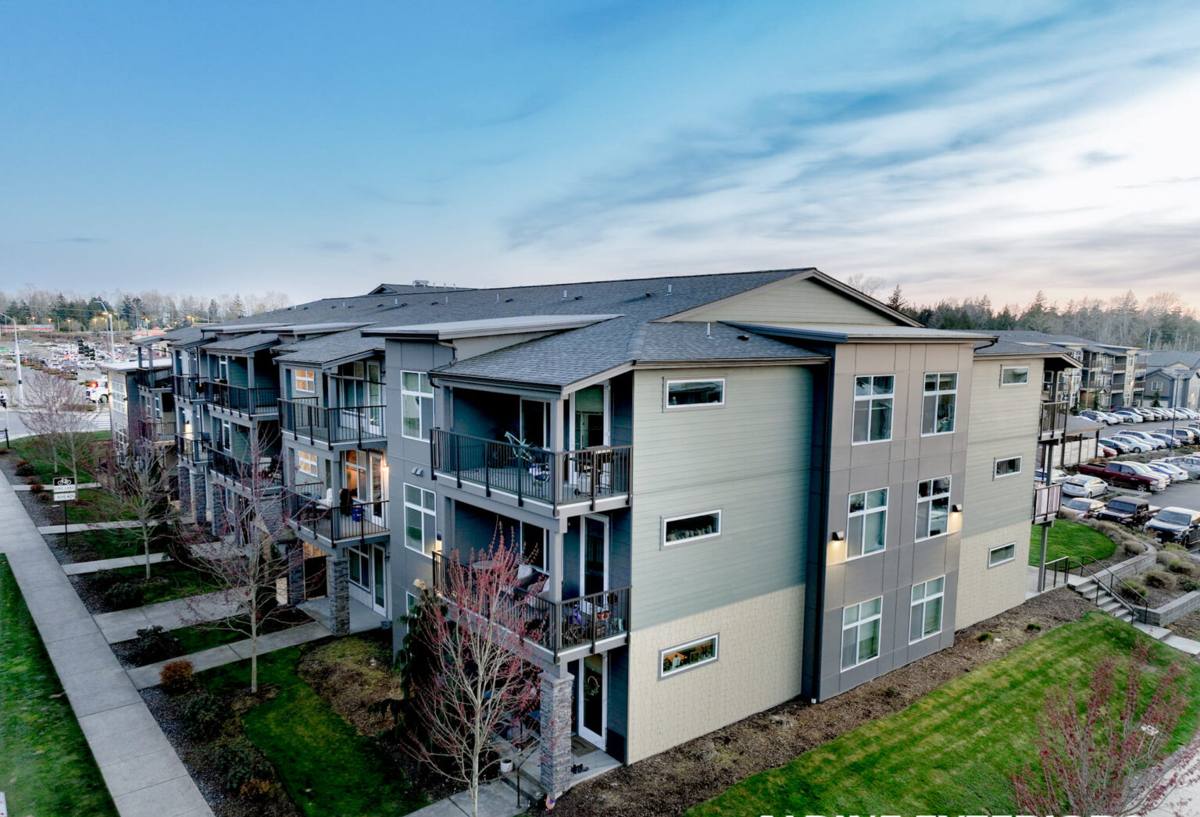
What Driving Rain, Moss, and Salt Air Actually Do to Siding
Moisture that doesn't leave
Driving rain doesn't just wet the surface of a wall — wind-driven storms force water up under laps, around trim, and into any gap in the water-resistive barrier. On a shaded, tree-covered lot like a lot of Silver Beach properties, that moisture then sits. Wood-based and wood-derived sidings (cedar, primed spruce, and to a lesser extent engineered wood products) absorb that trapped moisture, swell, and eventually rot from the inside out — often long before the paint film on the surface shows a problem.
Moss and algae season
Bellingham's growing season for moss and algae runs long compared to drier parts of the state. On siding, that shows up as green-black streaking, especially on north-facing walls and anywhere overhung by trees. Moss holds moisture against the wall surface, which accelerates whatever rot or coating failure is already happening underneath. It's a cosmetic problem and a durability problem at the same time.
Salt-laden marine air
Whatcom County's proximity to Bellingham Bay and the Salish Sea means the regional air carries salt content that most inland siding products were never engineered for. Salt air accelerates corrosion of fasteners and metal flashing, and it degrades paint films faster than a comparable dry-climate installation. Products and finishes that aren't rated for a marine environment tend to chalk, fade, or fail at the seams sooner here than the manufacturer's national averages would suggest.
Why We Only Install James Hardie in This Neighborhood
We don't install LP SmartSide, vinyl, Cemplank, Allura, primed spruce, or cedar. That's a deliberate standard, not a lack of options. Each of those products has legitimate strengths, but every one of them has a real-world weak point that shows up faster in a climate like Silver Beach's:
- Vinyl expands and contracts with temperature swings, can warp under sustained direct sun exposure on south-facing walls, and its seams and J-channels give wind-driven rain more paths to get behind the cladding.
- Engineered wood products like LP SmartSide perform well when detailing is perfect, but any breach in the factory coating exposes wood-based substrate to exactly the kind of standing moisture this climate produces.
- Primed spruce and cedar are natural wood — beautiful, but they require an ongoing maintenance commitment (recoating, caulking, moisture monitoring) that most homeowners underestimate, and moss/algae exposure here shortens the window between maintenance cycles.
James Hardie's fiber cement is cement, sand, and cellulose fiber — it doesn't rot, it isn't attractive to pests, and it's engineered specifically for high-moisture climate zones through Hardie's HZ5 product line, which is what we specify for this region. The factory-applied ColorPlus finish is baked on under controlled conditions, which holds up to UV and salt air meaningfully better than field-applied paint on wood siding. That's the whole reason we standardized on it: it's the product that actually matches what this climate demands.
What a Correct Hardie Installation Involves Here
Water management comes first
The siding material is only as good as the water-resistive barrier and flashing behind it. On a Silver Beach re-side, that means a continuous weather-resistive barrier, correctly lapped and taped seams, and flashing at every window, door, and horizontal trim transition — installed so water is directed out and down, never trapped behind the cladding. This is the step that determines whether a house stays dry for the next 30 years or develops hidden rot in year eight.
Fastening and clearances
Hardie's installation instructions specify fastener type, spacing, and penetration depth, and they specify minimum clearances from grade, roof lines, and decks. In a wet climate, those clearances aren't a formality — they're what keeps splashback and standing water away from the bottom course of siding, which is the first place failure shows up on any home.
Caulking and joint treatment
Every butt joint, corner, and penetration needs the correct sealant, applied correctly, or it becomes a water entry point. This is a place where rushed installations fail early, and it's invisible to a homeowner until moisture damage is already underway behind the wall.
Painting and color
Most Silver Beach installs use Hardie's factory ColorPlus finish, which comes with its own dedicated finish warranty and doesn't need field painting. For custom colors, correctly priming and painting cut edges and field-cut panels is a step that's easy to skip and important not to.
Comparing What Homeowners in Silver Beach Actually Consider
| Factor | James Hardie Fiber Cement | Vinyl | Cedar / Primed Wood |
|---|---|---|---|
| Moisture tolerance | Does not rot; engineered HZ5 line for wet climates | Doesn't absorb water, but seams allow water behind panels | Absorbs moisture; rot risk if coating fails |
| Moss/algae resistance | Factory finish resists staining better than field-applied coatings | Resists moss growth on the surface itself, but traps moisture behind it | Moss holds moisture directly against wood grain |
| Salt air / coastal performance | Rated for marine exposure; factory finish holds color | Can chalk and fade faster in coastal air | Salt air accelerates coating breakdown, requiring more frequent recoats |
| Fire performance | Non-combustible | Combustible; can deform under radiant heat | Combustible |
| Maintenance | Occasional wash; no recoating with ColorPlus | Low maintenance but limited repair options | Recurring recoat/reseal cycle |
| Typical warranty | Long-term, transferable factory warranty on material and finish | Varies widely by manufacturer and grade | No manufacturer warranty; performance depends on maintenance |
Our Process for a Silver Beach Project
Site assessment
We walk the property and look specifically at drainage, tree cover, sun exposure on each elevation, and the condition of the existing water-resistive barrier and sheathing. That tells us where the current siding is failing and why, which shapes the install plan.
Scope and product selection
We spec HardiePlank, HardieShingle, or HardiePanel based on the home's style, and select the ColorPlus or field-paint approach based on your preference and the elevation's sun/moisture exposure.
Permitting
Bellingham and Whatcom County permitting requirements apply to exterior re-siding work depending on scope; we handle that process as part of the job so you're not tracking it down yourself.
Installation and inspection
We install to Hardie's published specifications for water-resistive barrier, flashing, fastening, and clearances — the details covered above — and walk the finished job with you before we call it done.
Maintenance That Actually Matters in This Climate
James Hardie siding is low-maintenance, not no-maintenance. In a climate with this much moss pressure and driving rain, a short annual routine keeps it performing the way it's designed to:
- Rinse siding annually, focusing on north-facing and shaded walls where moss and algae take hold first
- Keep gutters clear so overflow doesn't run down the wall face
- Trim back vegetation and tree limbs that keep siding shaded and damp
- Check caulk lines at joints, corners, and trim yearly and re-caulk if you see cracking or gaps
- Watch for any staining or discoloration near grade, which usually signals a splashback or drainage issue, not a siding defect
- Address any impact damage (a cracked panel from debris or equipment) promptly, since exposed edges are where moisture gets in
Why Hiring a Crew That Already Works This Neighborhood Matters
A correct Hardie installation depends on getting dozens of small details right — flashing laps, clearances, fastener schedules, caulk joints — and a crew that has already worked homes in Silver Beach and similar Bellingham neighborhoods has already seen how this specific climate exposes bad shortcuts. We've built our process around Whatcom County's rain load, moss pressure, and marine air, not a generic national install spec. That local repetition is what separates a siding job that looks good at handoff from one that still looks good in year fifteen.
If you're weighing a re-side in Silver Beach, we're happy to walk the property, look at what your current siding is telling us, and give you a straightforward, no-pressure estimate for a James Hardie installation built for this climate. Use the form below to get started.