 Bellingham Siding
 New Roof Installation in Sehome, Bellingham
A new roof is one of the biggest investments a Sehome homeowner will make in a house, and it's also one of the few home improvements where the quality of the install matters as much as the materials themselves. In Whatcom County, a roof isn't just covering the house from sun — it's standing up to salt-laden air off Bellingham Bay, wind-driven rain that comes in sideways during winter storms, and long stretches of damp, shaded weather that keep moss and moisture active for most of the year. A roof that's correctly built for this climate will outlast one that isn't, even if the shingle brand on the invoice is identical.
Sehome's mix of older homes near downtown and newer infill construction means we see a wide range of roof ages, slopes, and past repair jobs. What most of them have in common is exposure to the same weather pattern: mild but consistently wet winters, tree cover that keeps parts of the roof shaded and slow to dry, and a marine climate that's harder on fasteners, flashing, and underlayment than drier inland areas realize.
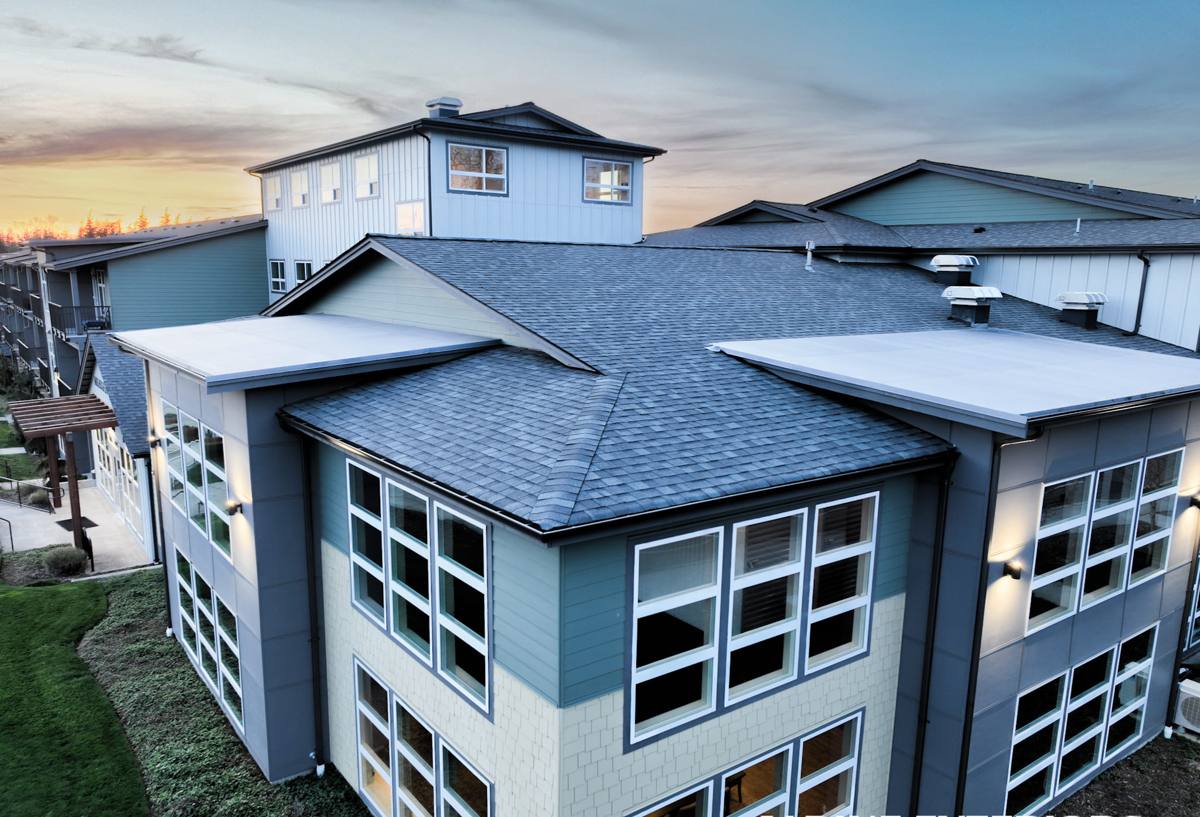
What Bellingham Weather Actually Does to a Roof
Salt Air and Moisture
Homes closer to Bellingham Bay deal with a low but steady level of salt in the air. Over years, that salt exposure accelerates corrosion on exposed metal — nail heads, flashing seams, gutter fasteners — faster than it would inland. It's rarely dramatic, but it's the kind of slow wear that turns into a leak five or ten years down the road if the original install used the wrong fastener type or skimped on flashing.
Driving Rain
Whatcom County storms don't always come straight down. Wind off the water pushes rain sideways and uphill under shingle edges, around chimneys, and into valleys. A roof built for a drier or calmer climate can get away with minimal underlayment and basic flashing details. A roof built for Bellingham can't — every penetration, valley, and edge needs to assume water will be pushed at it from an angle, not just dropped on top of it.
Moss and Shade
Many homes in and around Sehome sit near mature trees or wooded slopes, which is part of the neighborhood's character but also means roofs stay shaded and slow to dry out after rain. Moss doesn't just look bad — it holds moisture against the roofing material, lifts shingle edges as it grows, and shortens the life of whatever's underneath it. A new roof installed with moss growth in mind lasts noticeably longer than one that wasn't.
Signs a Sehome Roof Needs Replacing, Not Just Patching
Not every roof problem calls for full replacement — but there's a point where repeated patch jobs stop making financial sense. Here's what we look for during an inspection:
- Shingles that are cupping, cracking, or losing granules across large sections, not just one spot
- Moss or algae established across most of the roof rather than isolated shaded patches
- Soft spots or sagging when walked on, which usually means deck damage underneath
- Daylight visible through the attic roof boards, or damp insulation after storms
- Flashing around chimneys, skylights, or vents that's rusted, lifted, or was never properly stepped in
- A roof that's already had two or more rounds of emergency leak repairs in recent years
- Granules collecting in gutters and downspouts, a sign the shingles are past their protective life
- A roof approaching or past the age rating of its original material, especially if it was a builder-grade install
If a roof is only showing one or two of these, a repair or a maintenance visit may be the more honest recommendation — we'll tell you that plainly during the estimate rather than push a replacement that isn't needed yet.
What a Correct New Roof Installation Actually Involves
Tear-Off and Deck Inspection
We remove the old roofing down to the deck rather than layering over it. This lets us actually see the condition of the plywood or plank sheathing underneath, which is the part of the roof system homeowners can't inspect themselves. Soft, delaminated, or water-stained decking gets replaced before anything new goes down — installing new roofing over a compromised deck just hides the problem for another owner to find later.
Underlayment and Moisture Barriers
This is where a lot of the climate-specific work happens. Given how much wind-driven rain and prolonged dampness Whatcom County sees, we use self-adhering, waterproof underlayment at eaves, valleys, and other vulnerable areas — not just the minimum felt paper a warmer, drier climate could get away with. This is the layer that protects the house if wind ever drives water past the shingles themselves.
Flashing and Valleys
Flashing is where most roof leaks actually originate, not the shingle field. Chimneys, skylights, vent pipes, and roof-to-wall intersections all need properly stepped and sealed flashing, sized and installed for the specific slope and detail — not a generic piece bent to roughly fit. Valleys, where two roof planes meet and water concentrates, get extra attention since they carry the heaviest water flow during a storm.
Ventilation
A roof needs to breathe. Proper intake and exhaust ventilation keeps the attic space at a reasonable temperature and humidity level, which reduces condensation buildup, helps shingles last their full rated life, and reduces the conditions moss and mildew thrive in. On many older Sehome homes, ventilation was undersized or blocked by insulation added over the years — we address this as part of the new roof rather than leaving an outdated system in place.
Final Layer and Ridge
The visible shingle or roofing layer goes down last, with proper nailing patterns (not staples, not overdriven or underdriven fasteners) and ridge capping that matches the exposure the roof will actually see. This is also where corrosion-resistant fasteners matter most, given the salt air closer to the water.
Choosing a Roofing Material for This Climate
There's no single "best" roofing material for every home — it depends on budget, roof slope, and how much long-term maintenance a homeowner wants to take on. Here's how the common options compare for a Bellingham, marine-climate environment:
| Material | Moisture & Moss Resistance | Typical Lifespan | Maintenance | Relative Cost |
|---|---|---|---|---|
| 3-Tab Asphalt Shingle | Fair — more prone to moss in shaded areas | 15–20 years | Periodic moss treatment recommended | Lower |
| Architectural (Dimensional) Shingle | Good — thicker profile sheds water better | 25–30 years | Occasional cleaning in shaded areas | Moderate |
| Standing Seam Metal | Excellent — moss struggles to establish, sheds water fast | 40–50+ years | Low, mostly gutter and fastener checks | Higher |
| Cedar Shake | Poor without diligent upkeep — retains moisture, needs treatment | 20–30 years with maintenance | High — regular treatment and inspection | Higher |
For most Sehome homes, architectural asphalt shingle offers the best balance of upfront cost and performance in our climate. Metal is a strong option for homeowners planning to stay long-term or who want to minimize moss and maintenance work over the decades. We'll walk through the honest trade-offs for your specific roof during the estimate rather than steer you toward whatever has the best margin.
Our New Roof Installation Process
- On-site inspection. We climb the roof, check the attic, and assess deck condition, ventilation, and flashing before writing anything up.
- Written estimate. A clear scope of work and price, including material options, with no pressure to decide on the spot.
- Scheduling and material order. We confirm timing around weather windows, since a new roof shouldn't be installed in the middle of a storm system.
- Tear-off and deck repair. Old roofing comes off, the deck is inspected, and any damaged sheathing is replaced.
- Underlayment, flashing, and ventilation. The parts of the job that don't show but determine whether the roof actually performs in this climate.
- Final roofing installation. Shingles or panels go down with proper nailing, ridge capping, and attention to every valley and penetration.
- Cleanup and magnetic sweep. Site cleared of debris and stray fasteners before we consider the job done.
- Final walkthrough. We go over the finished roof and warranty paperwork together.
Permits and Working With the City of Bellingham
Most new roof installations in Bellingham require a building permit, and inspection requirements can vary depending on the scope of work and whether structural repairs are involved. Handling this correctly matters for two reasons: it protects the homeowner if there's ever an insurance claim or a future home sale, and it ensures the work is actually inspected against code rather than just done and covered up. We handle the permitting process as part of the job so it's one less thing the homeowner has to track down.
Why a Crew That Already Works in Sehome Matters
Roofing crews unfamiliar with Whatcom County sometimes install roofing systems designed for drier, calmer climates — lighter underlayment, minimal flashing details, ventilation specs that don't account for how wet and shaded this area stays. A crew that regularly works Sehome and the surrounding Bellingham neighborhoods already knows which details matter here: where moss tends to establish first, how much underlayment coverage is actually worth the extra cost, and how the area's mix of older and newer construction affects deck condition and ventilation needs.
There's also a practical side to being local. If a storm causes damage or a question comes up after the job is finished, a Bellingham-based crew can be back on the roof quickly rather than weeks later. That responsiveness matters more here than in a climate where roofs sit untested for most of the year.
What a New Roof Warranty Should Actually Cover
Warranties on a new roof typically come in two parts: a manufacturer's warranty on the material itself, and a workmanship warranty from the contractor covering the installation. The material warranty protects against product defects; the workmanship warranty is what protects the homeowner if a leak develops because of how something was installed — flashing, nailing, ventilation, and similar details. Before signing with any contractor, it's worth asking exactly what the workmanship warranty covers and for how long, since that's the part that actually reflects confidence in the install.
Ready for a Straightforward Roof Estimate
If your Sehome roof is showing its age, dealing with persistent moss, or you just want an honest read on how much life it has left, we're happy to take a look. Estimates are free, there's no pressure to commit on the spot, and you'll get a clear explanation of what's actually going on with your roof and what it would take to fix it right. Fill out the form below to get started.