 Bellingham Siding
 Ferndale's Climate Is Hard on Siding
Ferndale sits close enough to the water and to the open farmland along the Nooksack lowlands that homes here take a different kind of weather than siding was ever built to survive without help. Salt-laden air blows in off the Strait of Georgia and Bellingham Bay, driving rain comes sideways for months at a stretch, and a long, damp moss season settles in every fall and doesn't let go until late spring. None of that is dramatic on its own. It's the accumulation — years of it, one wet season after another — that wears down siding that wasn't built or installed for this part of Whatcom County.
Salt air corrodes fasteners and finishes faster than inland weather does. Driving rain finds every gap in flashing and trim that a fair-weather installer never had to think about. And moss doesn't just grow on roofs — it takes hold in siding laps, behind trim boards, and anywhere moisture sits against wood or wood-based products longer than it should. Siding installed correctly, in the right material, handles all of this without much drama. Siding installed carelessly, or in a material that wasn't built for it, starts showing problems within a handful of years — and by the time you can see them from the street, there's usually more damage behind the surface than in front of it.
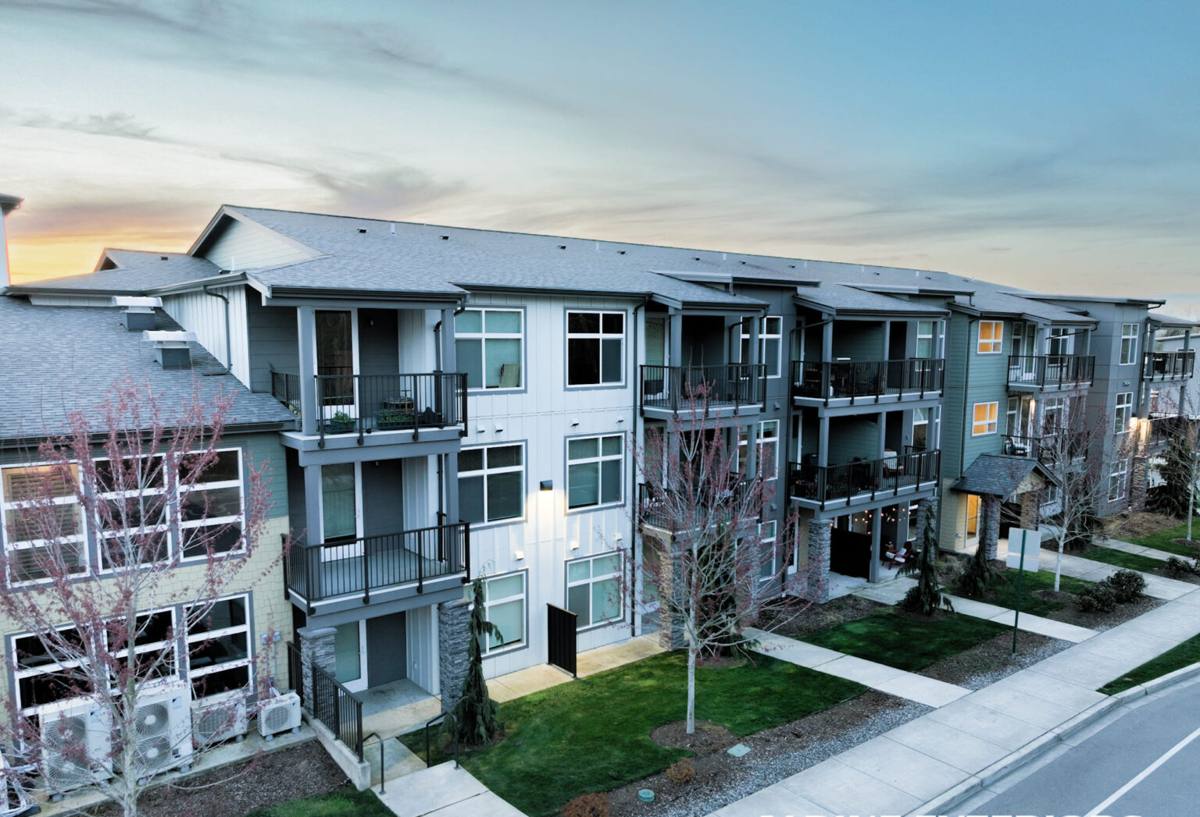
What a Correct Siding Installation Actually Involves
Siding installation is not really about the siding. The panels or boards you see are the last layer of a system, and in a climate like Ferndale's, the layers underneath do most of the work. A siding job that looks right from the driveway can still fail if the water-resistive barrier, flashing, and fastening weren't done correctly — and those mistakes don't show up until the siding is already coming off the wall.
Water Management Starts Underneath the Siding
Before a single piece of siding goes up, the wall needs a continuous weather-resistive barrier, properly lapped and taped, with flashing integrated at every window, door, deck ledger, and roof-to-wall transition. Any point where water can get behind the siding — and in driving rain, it will try — needs a planned path back out. This is the part of the job that's invisible once it's finished, and it's also the part most likely to be rushed on a crew that isn't used to installing to this level of detail.
Fastening and Clearances Matter More Than the Siding Itself
Fiber cement siding has specific fastening requirements — nail placement, spacing, and depth all affect how the siding performs over time, and getting them wrong can void the manufacturer's warranty even when the siding itself is a good product. Clearance also matters: siding installed too close to grade, a roofline, a deck, or a patio traps moisture against the bottom edge and gives moss and mildew a place to start. A correct installation keeps proper gaps everywhere the siding meets another surface, even where it costs a little more labor to do it right.
Why We Only Install James Hardie Fiber Cement
We install James Hardie fiber cement siding exclusively — we don't install vinyl, LP SmartSide, primed spruce, cedar, or other fiber cement brands. That's a deliberate standard, not a sales pitch. Hardie's HZ5 product line is engineered specifically for the kind of wet, marine-influenced climate Ferndale and the rest of Whatcom County deal with. It's non-combustible, it doesn't rot or delaminate the way wood-based and some engineered wood products can once moisture gets past the surface finish, and its factory-applied ColorPlus finish holds up to UV and salt air far longer than field-applied paint typically does. It also carries a strong transferable warranty when installed to Hardie's specifications — which is exactly why correct installation matters as much as the material choice itself. A great product installed poorly still fails. We'd rather stand behind one system we know inside and out than offer a menu of options with different failure points.
Our Process for Ferndale Installations
We've installed Hardie siding on enough homes in and around Ferndale and Bellingham to know what this specific climate does to a wall over time, and our process is built around that.
Inspection and Assessment
We start by looking at what's actually happening behind your current siding, not just what it looks like from the curb. That means checking for soft spots, moisture damage, and problem areas around windows, trim, and roof-to-wall transitions — the places driving rain and moss find first. This tells us whether we're dealing with a straightforward re-side or whether there's sheathing or framing repair to plan for before new siding goes on.
Preparation and Removal
Old siding comes off, and any damaged sheathing, trim, or framing gets addressed before anything new goes up. Covering over rot or deferred damage is one of the most common shortcuts in this trade, and it's the one that causes the most expensive problems five or ten years down the road.
Installation to Spec
We install the weather-resistive barrier and flashing system first, then the Hardie siding itself, following manufacturer fastening and clearance specifications throughout — not as a minimum, but as the standard we hold every job to. This is also where we account for Ferndale's exposure: extra attention at grade-level clearances, roof and deck transitions, and anywhere moss and standing moisture tend to collect.
Final Walkthrough
We walk the finished job with you, cover care and maintenance for your specific siding line and color, and make sure you know what normal weathering looks like versus something that should get a call back to us.
Signs Your Ferndale Home May Need New Siding
Some of these show up gradually, and homeowners often chalk them up to normal aging before realizing they've been looking at a moisture problem for a while.
- Soft or spongy areas when you press on the siding, especially near the bottom courses or around windows
- Persistent moss, algae, or dark staining that comes back within a season of cleaning
- Paint that's peeling, bubbling, or needs repainting more often than every several years
- Visible warping, cracking, or gaps between boards or panels
- Rising energy bills that don't match your home's age or your usage habits
- Interior signs — musty smells, bubbling wall paint, or staining near exterior walls
Any one of these on its own isn't necessarily an emergency. Several of them together, especially on a home that's due for its next siding cycle, are worth a closer look before another wet season adds to the damage.
What Affects the Cost of a Ferndale Siding Installation
Every home is different, and we don't publish blanket pricing because the honest answer depends on your home's specifics. The factors below are the ones that move the number most.
| Factor | Why It Affects Cost |
|---|---|
| Home size and wall area | More square footage means more material and labor in a fairly direct relationship |
| Number of stories | Multi-story homes need more scaffolding, staging, and safety setup |
| Condition underneath the old siding | Sheathing or framing repair adds cost but prevents covering up existing damage |
| Trim, corners, and architectural detail | More cuts, more corners, and more trim work all add labor time |
| Siding line and profile chosen | Hardie offers several plank, shingle, and panel styles at different price points |
| Access around the home | Tight side yards, decks, and landscaping close to the walls slow the work |
We walk every home in person before giving a number, because estimating a Ferndale job from a photo or a square-footage guess almost always misses something that matters once the old siding comes off.
Caring for Your New Siding
Fiber cement siding installed correctly needs far less upkeep than wood or engineered wood siding, but it's not zero-maintenance — especially in a climate that grows moss on nearly everything. A rinse-down once or twice a year keeps salt residue and organic buildup from settling into the finish. Keep an eye on caulking at trim joints and penetrations, since caulk is a maintenance item on any siding system and typically needs attention well before the siding itself does. Trim back vegetation and keep gutters clear so water isn't running down the wall or pooling near the base of the siding during the wetter months.
Why Hire a Crew That Already Works in Ferndale
Siding installation isn't a one-size-fits-all trade. A crew that mostly works drier inland climates can do competent work and still miss the details that matter here — because they've never had to. A crew that already works Ferndale, Bellingham, and the rest of Whatcom County knows where moss actually collects on a wall, how far driving rain can drive water sideways under a poorly flashed trim board, and what a wall assembly needs to hold up through a Pacific Northwest winter without babysitting. That local track record isn't a marketing line — it shows up in the flashing details, the fastening, and the clearances that don't get skipped because someone's in a hurry to move to the next job.
If your Ferndale home is due for new siding, or you're seeing any of the warning signs above, we're happy to take a look and walk you through what we'd recommend and why. Reach out for a free, no-pressure estimate using the form below.