 Bellingham Siding
 Metal Roofing in a Neighborhood That Doesn't Go Easy on a Roof
Fairhaven sits close to Bellingham Bay, and that location puts a specific set of stresses on a roof that inland Whatcom County homes simply don't deal with in the same way. Salt-tinged marine air drifts over the neighborhood most of the year, rain gets pushed sideways by wind off the water more often than it falls straight down, and the mature tree canopy common on Fairhaven's older, hillside lots keeps roof surfaces shaded and damp for long stretches. Put those three things together and you get a moss season that can run nearly year-round on the wrong exposure, plus a steady, quiet corrosion pressure on anything metal that isn't built or installed for it.
Metal roofing can handle that combination better than most other roofing materials, but only if the system, the flashing details, and the installation itself are matched to the conditions. A metal roof put on with a generic, inland-spec approach will still underperform here. This page is about what a metal roof actually needs to do its job on a Fairhaven home, not a general overview of metal roofing everywhere.
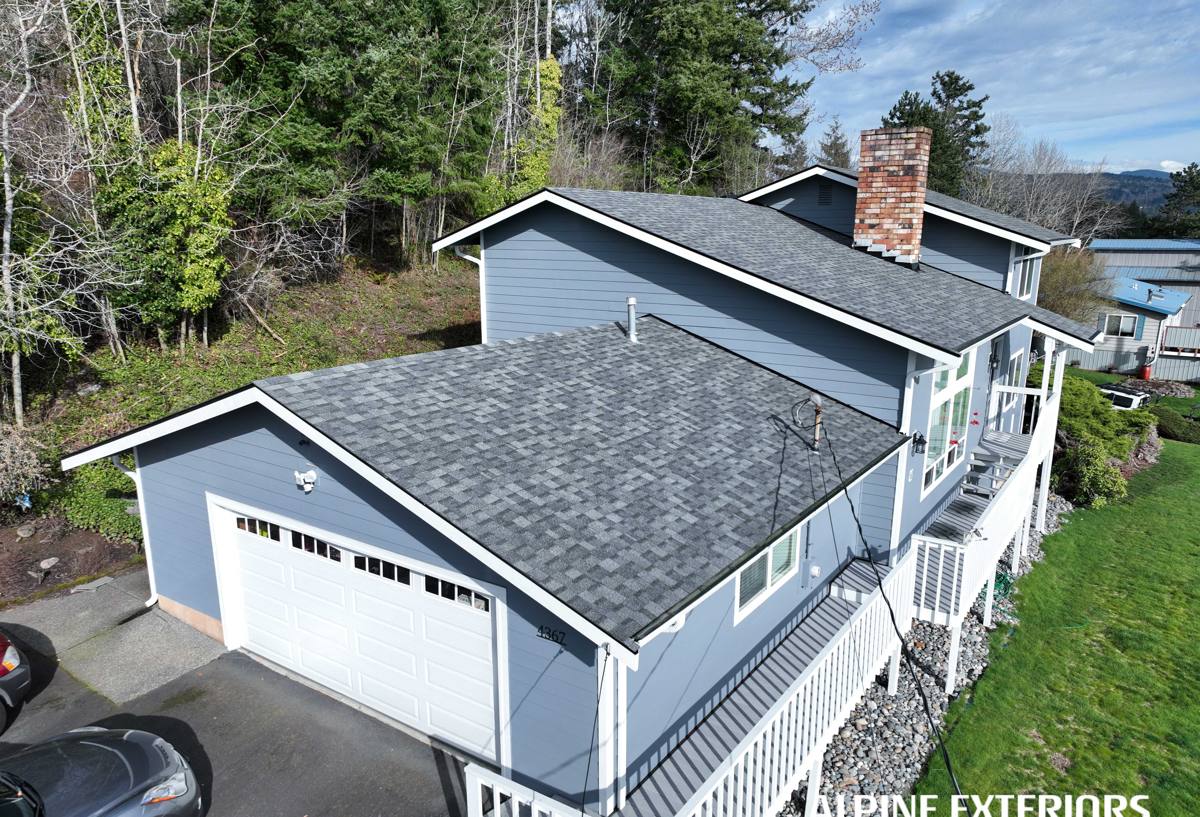
What Salt Air, Rain, and Moss Do to a Metal Roof Over Time
Salt and Slow Corrosion
Marine air carries fine salt particulates that settle on any exposed metal surface, including roofing panels, fasteners, and flashing. On a well-coated, properly installed metal roof, that exposure is manageable. On a roof with lower-grade fasteners, exposed cut edges, or a coating not rated for coastal use, salt exposure accelerates rust and finish breakdown in ways that aren't obvious from the ground. It shows up years in as rust streaking at fastener heads, pitting at panel seams, or a finish that's chalked and dulled well ahead of its rated service life.
Wind-Driven Rain at Seams and Penetrations
Fairhaven's exposure to wind coming off the bay means rain doesn't just land on a roof, it gets driven up under laps, into seams, and around penetrations like vents and chimney flashing. A metal roofing system with the wrong seam type or fastening pattern for this kind of wind-driven moisture can take on water at exactly those points, even though the panels themselves are performing fine.
A Long Moss Season on Shaded Surfaces
Metal sheds moss better than porous roofing materials because it doesn't give moss spores the textured surface they need to establish, but it isn't moss-proof. Debris that collects in valleys, at panel laps, or behind roof penetrations still holds moisture and gives moss and organic growth a foothold, especially on the shaded, north-facing slopes common on Fairhaven's tree-covered lots. Once moss gets a start in a debris pocket, it holds moisture against the panel finish longer than the open field of the roof does.
Hillside Drainage
A lot of Fairhaven's housing sits on sloped terrain rising from the waterfront. That affects how water moves across a roof and off the eaves during heavy rain, and it means gutter sizing, valley design, and drainage at the roof edge deserve real attention, not just a standard inland layout applied without adjustment.
Choosing the Right Metal Roofing System for This Climate
Not all metal roofing is built the same way, and the differences matter more here than they would in a drier, calmer climate. The two main categories homeowners run into are standing seam panels and exposed-fastener (screw-down) panels, and the choice between them affects long-term performance in a marine environment.
| System | How It's Fastened | Coastal Performance | Best Fit |
|---|---|---|---|
| Standing seam | Concealed clips under raised, interlocking seams — no exposed fasteners through the panel face | Best resistance to wind-driven rain and long-term seal integrity; no exposed fastener heads to corrode over time | Homes prioritizing longevity and lower long-term maintenance, especially closer to the water |
| Exposed-fastener | Screws driven directly through the panel face into the deck, with rubber washers sealing each one | Lower upfront cost, but every exposed fastener and washer is a potential future leak point as washers age and salt air works on the screw heads | Budget-conscious projects on outbuildings or less exposed roof planes |
| Aluminum panel systems | Standing seam or exposed-fastener, in aluminum instead of steel | Naturally corrosion-resistant since aluminum doesn't rust the way steel does, though it's a softer material and costs more | Homes with the heaviest direct salt exposure, where corrosion resistance is the top priority |
Coatings Matter as Much as the Panel
The metal substrate is only half the equation. A quality factory-applied paint finish, typically a fluoropolymer coating baked on under controlled conditions, resists chalking, fading, and coastal salt exposure far longer than a field-applied or lower-grade coil coating. We check coating specs the same way we check gauge and panel profile, because a good panel with a weak finish will still fail early in this climate.
What a Correct Metal Roof Installation Actually Involves
Deck Prep and Underlayment
Metal roofing depends on what's underneath it as much as the panels themselves. That means confirming the deck is sound before anything goes down, and installing a high-temperature, self-adhering underlayment at eaves, valleys, and penetrations where wind-driven rain is most likely to test the system. Skipping or downgrading underlayment is one of the most common shortcuts we see on older metal roof installations in this area, and it's usually invisible until a leak shows up.
Fastening and Panel Layout
Panel spacing, clip placement, and fastening patterns need to account for both thermal movement, since metal panels expand and contract more than shingles do, and wind uplift, which is a real factor on exposed or elevated Fairhaven lots. Panels fastened without room to move can buckle or work fasteners loose over time.
Flashing at Every Transition
Valleys, chimneys, skylights, vent penetrations, and wall transitions are where the vast majority of roof leaks actually start, on metal roofs just as much as any other material. Correct flashing at each of these points, integrated with the underlayment rather than just caulked over the top, is what determines whether a metal roof performs for decades or develops slow leaks within a few years.
Ventilation
A metal roof needs a ventilated attic space beneath it to manage condensation, particularly in a climate with this much sustained humidity. Without adequate intake and exhaust ventilation, moisture can condense on the underside of the panels, which causes problems that have nothing to do with the roofing material itself failing.
Roof Design Choices That Cut Down on Moss and Debris
A few design decisions made during installation make ongoing maintenance meaningfully easier on a shaded Fairhaven lot:
- Wider, properly sloped valleys that don't trap debris and allow water and moss-forming organic matter to wash through instead of collecting
- Gutter and eave detailing sized for the volume of wind-driven rain this area actually sees, not a generic regional default
- Snow and ice retention or drip edge details appropriate to the specific roof slope and exposure
- Panel profiles and colors chosen with an eye toward how they'll actually read against a shaded, tree-lined lot over time, not just on install day
None of these are dramatic changes, but on a roof that's going to sit under tree cover near the water for the next several decades, small design decisions at install time save real maintenance effort later.
Our Process, Start to Finish
We walk the roof in person before quoting anything. That means getting on the roof or in the attic when access allows, checking deck condition, existing ventilation, and how water is currently moving off the roof and away from the house. From there we talk through panel system options, coating grade, and cost trade-offs in plain terms, with a written scope that spells out underlayment, flashing details, and fastening specs rather than a vague line item that just says "new metal roof."
During installation, we sequence the tear-off, deck repair if needed, underlayment, and panel installation as one continuous process rather than leaving a deck exposed to Fairhaven's weather longer than necessary. Once the roof is on, we walk the finished job with the homeowner, covering what routine maintenance actually looks like and what to watch for as the roof settles in through its first few wet seasons.
Maintenance That Actually Matters for a Fairhaven Metal Roof
A correctly installed metal roof is low-maintenance compared to most alternatives, but "low-maintenance" isn't "no-maintenance," especially with this much moss pressure and salt exposure. What's actually worth doing:
- Clear valleys, gutters, and roof-to-wall transitions of leaves and debris at least once a year, more often under heavy tree cover
- Have moss or organic buildup in shaded areas removed before it holds moisture against the panel finish long-term
- Walk the roofline periodically for signs of loose fasteners, lifted flashing, or finish damage after major wind events
- Keep overhanging branches trimmed back to reduce both debris load and abrasion against the panel finish
- Avoid pressure washing directly on the roof surface, which can drive water under laps and damage coatings; a soft wash or manual clearing is safer
What Affects the Cost of a Metal Roof in Fairhaven
| Factor | Why It Affects Price |
|---|---|
| Panel system (exposed-fastener vs. standing seam) | Standing seam requires more labor and material per square foot but reduces long-term leak risk and maintenance |
| Steel vs. aluminum | Aluminum costs more but resists corrosion better under sustained salt exposure closer to the water |
| Roof complexity and pitch | Valleys, dormers, and steep or hillside-adjacent rooflines add labor time and material waste |
| Tear-off vs. overlay | Tear-off exposes and allows repair of hidden deck damage, which is common under older roofing this close to the bay |
| Access and site conditions | Hillside lots and mature landscaping common in Fairhaven can add staging and setup time |
| Coating grade | A higher-grade fluoropolymer finish costs more upfront but resists fading and chalking far longer under coastal UV and salt exposure |
Real numbers depend on the specific roof, which is why we price off an in-person walkthrough rather than square footage alone.
What to Check Before Hiring a Metal Roofing Contractor Here
- Confirm an active Washington state contractor license and current insurance
- Ask which panel system and gauge they're proposing, and why it fits your specific roof and exposure
- Ask about coating grade and warranty coverage on the finish, not just the panel itself
- Ask how they detail valleys, penetrations, and wall transitions, since that's where most leaks originate
- Get a written scope specifying underlayment and flashing details, not just "metal roof installed"
Why Local Fairhaven Experience Matters
A crew that works this stretch of Whatcom County regularly sees how salt air, wind-driven rain, and moss actually behave on real roofs across a full year, not just how a panel system performs on a spec sheet. That translates into practical decisions on install day: where extra flashing attention pays off, which valleys need to be sized larger than standard, and which roof orientations need the most moss-prevention attention. Fairhaven's proximity to Bellingham Bay and its shaded, hillside lots aren't identical to conditions elsewhere in Bellingham, and a crew with real experience in the neighborhood accounts for that instead of applying a one-size-fits-all approach.
If you're weighing a metal roof for your Fairhaven home, or just want an honest look at whether your current roof is holding up the way it should, we're glad to take a look. Reach out using the form below to schedule a free, no-pressure estimate.