 Bellingham Siding
 Edgemoor's Setting Is Hard on Siding
Edgemoor sits close to Bellingham Bay, tucked into wooded, hillside lots that give the neighborhood its character — mature trees, filtered light, and views toward the water. That same setting is tough on exterior siding. Homes here deal with salt-laden air moving in off the bay, driving rain that comes sideways during winter storms, and deep shade under tree canopy that keeps north- and east-facing walls damp long after the rest of the house has dried out. It's a different exposure profile than an open, sunny lot across town, and it changes how fast siding ages and what kind of siding holds up.
None of this is unique to Edgemoor — it's Whatcom County weather in general — but the combination of tree cover and water proximity concentrates the effects. Moss and algae get a head start in shaded, damp corners. Salt air accelerates corrosion on fasteners and trim hardware. And driving rain finds every gap in flashing or caulk that a fair-weather install might get away with elsewhere.
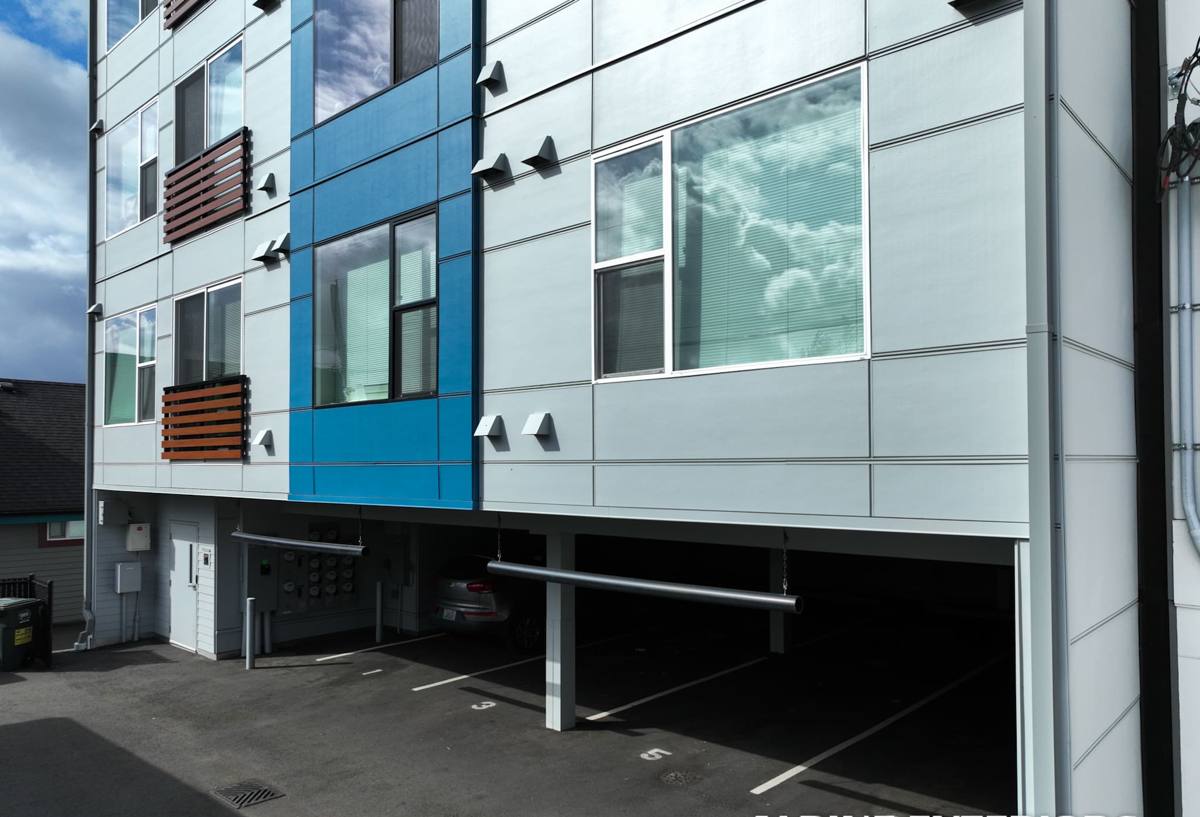
What Salt Air, Rain, and Moss Actually Do to Siding
Salt air
Airborne salt from Bellingham Bay settles on exterior surfaces and accelerates the breakdown of paint films, corrodes exposed steel fasteners, and pits softer trim materials over time. Siding systems that rely on a painted finish for protection — rather than a factory-baked finish — tend to chalk and fade faster in this kind of air.
Driving rain
Storms off the Strait push rain horizontally into wall assemblies, not just straight down. That means water finds its way behind siding at butt joints, around window and door trim, and at any seam where flashing wasn't lapped correctly. A house can look fine from the street for years while water is quietly working behind the surface.
Moss and shade
Whatcom County's moss season runs long — often eight months or more in shaded, tree-covered lots like many in Edgemoor. Moss and algae hold moisture against the siding surface, which is a problem for materials that swell, delaminate, or rot when they stay wet. It's mostly cosmetic on some materials and a structural concern on others.
Signs an Edgemoor Home Needs Siding Replacement
Because so much of the damage happens behind the surface, it's easy to miss until repairs become expensive. Look for these signs, especially on shaded or bay-facing walls:
- Soft or spongy spots when you press on the siding, especially near the bottom courses
- Persistent moss or algae staining that comes back within weeks of cleaning
- Paint that's peeling, bubbling, or chalking faster than the rest of the house
- Visible gaps, cracking, or warping at seams and corner boards
- Rusty streaks below nail heads or trim fasteners
- Musty smells or discoloration on interior walls that share an exterior wall
- Siding that was installed more than 20-25 years ago, regardless of visible condition
Any one of these is worth a look. Several at once usually means the water-resistive barrier behind the siding has been compromised for a while.
What a Correct Replacement Involves
Siding replacement isn't just swapping old boards for new ones. Done right, it's a full reset of the wall's drainage and moisture management, which matters more in a wet, shaded neighborhood than almost anywhere else.
Tear-off and sheathing inspection
Removing the old siding is also the only real chance to inspect the sheathing underneath. Any soft, delaminated, or rotted sheathing gets found and replaced here — patching over damaged sheathing just locks the problem behind new siding.
Weather-resistive barrier
A new house wrap or weather-resistive barrier goes on before any siding, with all seams taped and lapped so water sheds downward and outward, not into the wall cavity. This layer is what actually keeps a home dry — the siding is the first line of defense, the barrier is the backup that has to work when rain gets driving and horizontal.
Flashing and drainage plane
Every window, door, and penetration needs flashing that's integrated with the weather barrier, not just caulked over the top. A rainscreen or drainage gap behind the siding lets any incidental moisture drain and the wall breathe, instead of trapping water against the back of the boards.
Fastening and finishing to spec
Fastener type, spacing, and placement all follow the manufacturer's installation instructions — not general habit. Corrosion-resistant fasteners matter more here given the salt air, and factory-finished siding needs cut edges properly sealed and caulk joints done with the right sealant for a coastal, wet climate.
Why We Install Only James Hardie Fiber Cement
We install James Hardie fiber cement siding exclusively. That's a deliberate standard, not a limitation on what we're capable of installing. After years of exterior work in this climate, we've settled on Hardie because it holds up to exactly the conditions Edgemoor throws at a house:
- Non-combustible — fiber cement doesn't feed a fire the way wood-based or foam-backed products can
- ColorPlus factory finish — baked-on finish resists the fading and chalking that salt air causes on field-painted surfaces, and it holds color longer than most site-applied paint jobs
- Climate-engineered HZ product line — Hardie's HZ5 formulation is engineered for wetter, freeze-thaw climates like the Pacific Northwest, which matters directly in a rainy, shaded neighborhood
- Moisture stability — fiber cement doesn't swell, cup, or rot when it stays damp under tree cover the way some wood and wood-composite products can
- Strong transferable warranty — backed by a manufacturer warranty that can transfer to a new owner, which matters for resale in a desirable neighborhood like this one
We don't install vinyl, LP SmartSide, Cemplank, Allura, or primed wood siding. Each of those has genuine strengths, but none of them matched what we wanted standing behind every job we put our name on, especially in a climate this wet.
Comparing Siding Options for Edgemoor's Climate
| Material | Moisture/rot resistance | Salt air performance | Fire resistance | Typical lifespan |
|---|---|---|---|---|
| James Hardie fiber cement | Excellent — cement-based, doesn't rot | Strong; factory finish resists fading/chalking | Non-combustible | 30+ years with proper install |
| Vinyl siding | Good on its own, but traps moisture behind it if installed poorly | Can become brittle and fade faster under UV and salt exposure | Combustible; can warp near heat sources | 15-25 years |
| Cedar / primed wood | Requires ongoing maintenance to resist rot, especially in shade | Salt air accelerates finish breakdown | Combustible | 10-20 years without diligent upkeep |
| LP SmartSide (wood-strand) | Engineered to resist moisture better than raw wood, but still wood-based | Field-applied finish wears in coastal air | Combustible | 20-25 years |
Cost and appearance matter too, but in a neighborhood with this much shade and salt exposure, moisture and finish durability tend to decide how a siding job actually performs ten and twenty years out.
Our Process, Start to Finish
- Free on-site estimate — we walk the exterior, check for soft sheathing, look at drainage and grading, and talk through what we're seeing
- Written scope and pricing — a clear breakdown of tear-off, sheathing repair (if needed), materials, and labor before any work starts
- Tear-off and inspection — old siding comes off, sheathing gets checked and repaired where needed
- Weather barrier and flashing — new house wrap, taped seams, and properly integrated window/door flashing
- Hardie installation — installed to manufacturer spec, including fastener type, spacing, and joint treatment
- Final walkthrough — we go over the finished job with you before calling it done
Why Local Experience in Edgemoor Matters
A crew that's worked in Edgemoor and similar Bellingham neighborhoods already knows what to expect: the tree-shaded walls that need extra attention to drainage, the bay-facing sides that take the worst of the wind-driven rain, and the local permitting process in Bellingham and Whatcom County. That familiarity shows up in small decisions — where to add extra flashing, which walls need a closer look at the sheathing, how to sequence the job around the wetter months — that a crew unfamiliar with this specific climate might not think to make.
It also means a straightforward conversation about what your home actually needs, without upselling products that don't hold up here or downplaying a moisture problem that needs to be addressed before new siding goes on.
Ready for an Honest Look at Your Siding?
If your Edgemoor home is showing any of the signs above, or it's simply due for a look after years of Bellingham Bay weather, we're happy to come take a look. Use the form below to request a free, no-pressure estimate — we'll assess what's really going on with your siding and give you a straight answer about what it needs.