 Bellingham Siding
 Fiber Cement Siding in Barkley: What Local Homes Actually Need
Barkley sits inside a stretch of Bellingham where the weather isn't dramatic day to day, but it's relentless over years. Salt-tinged air drifting in off the water, rain that comes in sideways more often than straight down, and a moss season that runs long on shaded and tree-covered walls all put steady pressure on a home's exterior. Siding in this specific spot has to deal with that combination continuously, not occasionally, and the material and installation choices that work fine in a drier or calmer climate start to show their limits here well before they should.
We install James Hardie fiber cement siding on Barkley homes, and every part of how we approach a project — the fastening pattern, the flashing details, the joint treatment — is built around what this particular climate does to a wall over ten, twenty, and thirty years, not around what looks acceptable on the day the job wraps up.
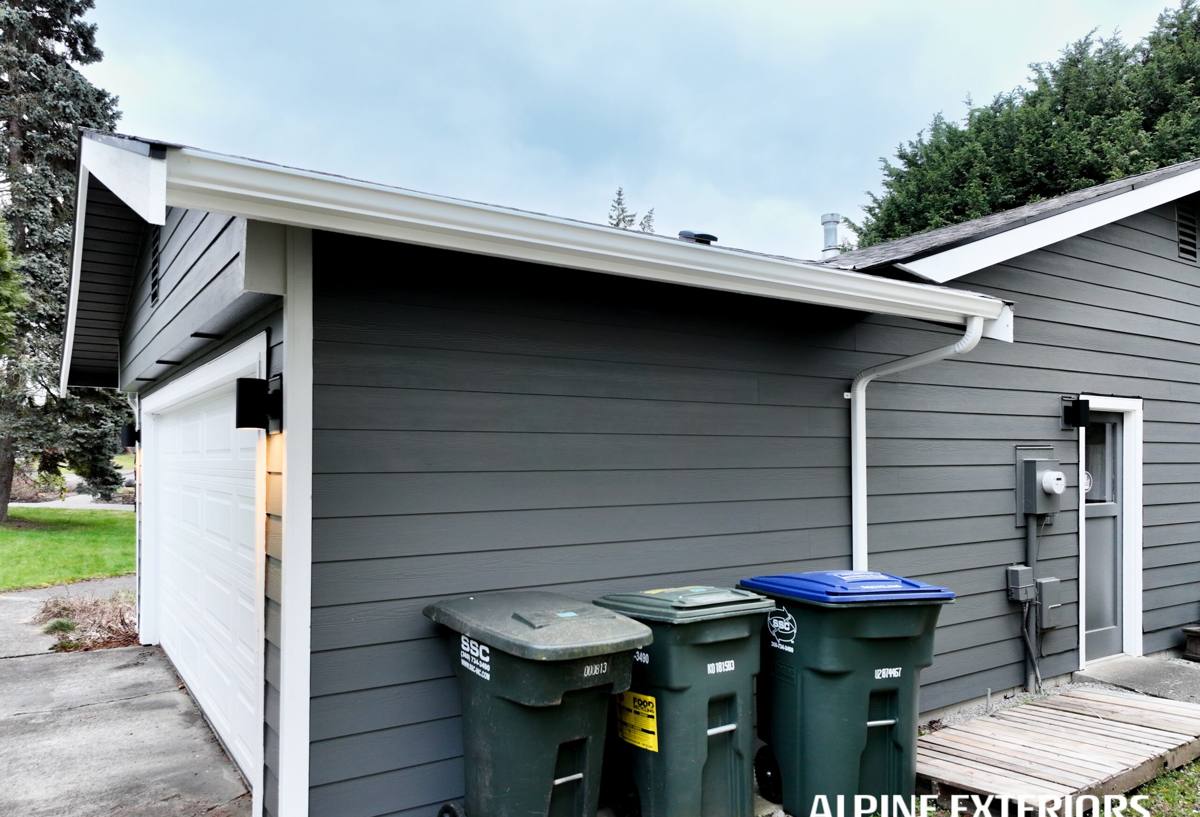
What Salt Air, Driving Rain, and Moss Do to Siding Here
Salt Air and Corrosion
Air carrying salt off the water speeds up corrosion on anything metal that's exposed — fasteners, flashing edges, hardware. It also keeps surfaces damp longer than they'd stay in a drier inland setting, which matters because sustained dampness is what breaks down a finish or a fastener coating faster than intermittent exposure ever would.
Driving Rain Against the Wall
Wind pushes rain sideways here more than it falls straight down, and sideways rain finds every lap, seam, and fastener point that a calmer climate wouldn't test nearly as hard. Clearances and flashing details that would be adequate somewhere with gentler weather need to be tighter and more deliberate in Barkley, because wind-driven water actively searches out whatever gap wasn't detailed correctly the first time.
A Moss Season That Doesn't Really End
Shaded walls, north-facing exposures, and anything under tree cover stay wet for long stretches through fall, winter, and much of spring — exactly the conditions moss needs to take hold. On a moisture-absorbent material, ongoing dampness isn't just cosmetic green staining. It's a durability problem, since sustained moisture against wood or wood-based siding eventually leads to swelling, softening, and rot starting at edges and seams.
Why Fiber Cement Fits Barkley Better Than the Alternatives
We install James Hardie fiber cement exclusively — not vinyl, not LP SmartSide, not primed spruce or cedar, and not other fiber cement brands like Allura or Cemplank. That's a professional standard, not a limitation on what we're capable of installing. In a climate like this one, the materials that tend to struggle over the long run share a common weakness: they either absorb moisture directly, rely on a field-applied or lower-grade factory coating to keep water out indefinitely, or expand and contract enough with temperature and humidity swings that seams gradually work themselves loose.
James Hardie is engineered specifically against that kind of exposure. It's non-combustible, it doesn't swell or feed moss the way wood-based siding can, and its ColorPlus factory finish is baked on under controlled conditions and warrantied against the fading and chalking that constant moisture and UV cycling cause over time. Hardie also builds climate-specific HZ formulations rather than one generic board for every region, which is relevant in a place that sees this much sustained dampness. Paired with a strong transferable warranty and installation done to the manufacturer's actual specifications, it's the system we're willing to put our name behind here.
What We Ask Homeowners to Weigh First
Vinyl, engineered wood, and other fiber cement brands aren't dishonest products, and each has legitimate uses in the right climate and budget. But in a salt-air, high-rain, long-moss environment like Barkley's, the maintenance burden and moisture risk on those alternatives tends to land back on the homeowner within a decade or two — repainting, recaulking, or panel replacement that a correctly installed Hardie system simply doesn't demand as often.
What a Correct Fiber Cement Installation Actually Involves
Fiber cement performs the way it's engineered to only when it's installed to spec. In a climate that tests every detail the way Barkley's does, skipping or shortcutting any one of the following can undercut the material's real-world lifespan, regardless of how good the board itself is:
- Correct clearance above grade, decking, and hardscape so lower courses aren't sitting in consistently damp conditions
- Properly lapped and sealed weather-resistive barrier underneath the siding, installed before the first board goes up
- Flashing detailed at every window, door, and penetration so wind-driven water is directed out and away rather than trapped behind the cladding
- Corrosion-resistant fasteners, correctly sized and spaced per manufacturer requirements — not generic nails driven at a generic spacing
- Butt joints and seams treated with the manufacturer-specified sealant or backer, not just caulked over as an afterthought
- Field-cut edges primed or sealed before installation so raw cut ends aren't left exposed to moisture
- Attention to which walls face prevailing wind and rain, and which stay shaded, so ventilation and clearance decisions match each wall's actual exposure
Our Process for a Barkley Fiber Cement Project
Assessment and Estimate
Every project starts with a walk of the property. We look at the existing siding's condition, note which walls take the most direct weather, check trim and window flashing, and give a straightforward read on whether full replacement makes sense or whether targeted repair will hold for a while longer. That assessment is free and comes with no pressure to move forward.
Prep and Substrate Repair
Once old siding comes off, we check what's underneath. Sheathing that's soft, stained, or already showing rot from years of trapped moisture gets addressed before anything new goes on — installing new siding over a compromised substrate just hides a problem instead of fixing it, and that's not a shortcut we take.
Installation
This is where the details from the checklist above get executed: weather-resistive barrier, flashing, fastener spec, clearances, and joint treatment, all set to the specifications this climate actually requires rather than a generic install.
Finish Details and Walkthrough
Trim, caulking at transitions, and touch-up work get finished out, and we walk the property with the homeowner before calling the job complete, so any questions about maintenance or what to watch for get answered on site rather than left for later.
Cost Factors for Fiber Cement Siding in Barkley
Every property is different, so we don't quote off square footage alone. The factors below are the ones that most commonly move a Barkley project's price and timeline:
| Factor | How It Affects the Project |
|---|---|
| Substrate condition underneath old siding | Rot or moisture damage found during tear-off adds repair scope before new siding can go on |
| Home size and wall complexity | More corners, dormers, and cut lines mean more labor and material waste than a simple rectangular wall |
| Siding profile chosen | Lap, panel, and board-and-batten profiles differ in material cost and installation labor |
| Number of windows, doors, and penetrations | Each one needs individual flashing work, which adds time relative to a plain wall section |
| Wall exposure and orientation | Walls that take the most direct wind-driven rain often warrant extra attention to flashing and clearance detail |
| Trim and finish level | Custom trim details and color selections add cost over standard trim packages |
Why Hiring a Crew That Already Works in Barkley Matters
A crew that's worked this specific area knows which walls tend to take the worst of the wind-driven rain, which properties hold onto shade and dampness longer because of tree cover, and how proximity to the water tends to accelerate wear on fasteners and finishes compared to homes further inland. That familiarity doesn't replace following manufacturer specifications — it informs how those specifications get applied to a given wall. A contractor unfamiliar with this climate may install a technically correct system that still underperforms here because the clearance, flashing, or ventilation decisions were made with a milder climate in mind.
Local experience also means fewer surprises during the project itself — knowing what to expect from typical Whatcom County weather windows, how substrate condition tends to look on homes of a certain age in this area, and how to sequence work so it isn't derailed by the first stretch of driving rain.
Signs Your Current Siding May Already Be Struggling
Not every issue means immediate replacement, but these are worth having a professional look at rather than assuming they'll resolve on their own:
- Green or dark staining that keeps returning on shaded walls even after cleaning
- Soft spots or slight give when pressing near trim, window edges, or lower courses
- Cupping, warping, or seams that have started to separate
- Rust streaks trailing down from fasteners or hardware
- Paint or finish that's chalking, peeling, or fading faster than it should for its age
- Caulking at joints that's cracked, shrunk, or pulled away from the surface
Moisture-related damage in this climate tends to compound rather than stay static, so catching one of these early is almost always less costly than waiting until it spreads.
Getting Started
If your Barkley home's siding is showing its age, or you're planning ahead of a problem rather than reacting to one, we're glad to take a look and give you a straightforward read on what it actually needs. Reach out using the form below to schedule a free, no-pressure estimate.