 Bellingham Siding
 Asphalt Shingle Roofing for Happy Valley Homes
Happy Valley sits close enough to the water and tree cover that its roofs take a different kind of beating than roofs a few miles inland. Homes here deal with a mix of salt-laden air moving in off Bellingham Bay, long stretches of driving rain through fall and winter, and shaded lots where moisture lingers on the roof deck far longer than it should. Asphalt shingle roofing remains one of the most practical choices for this neighborhood when it's specified correctly and installed by a crew that understands what the local conditions do to a roof over ten, twenty, and thirty years.
This page covers what a correctly built asphalt shingle roof looks like in Happy Valley specifically, the failure patterns we see most often in this part of Whatcom County, and what our process involves from first look to final inspection.
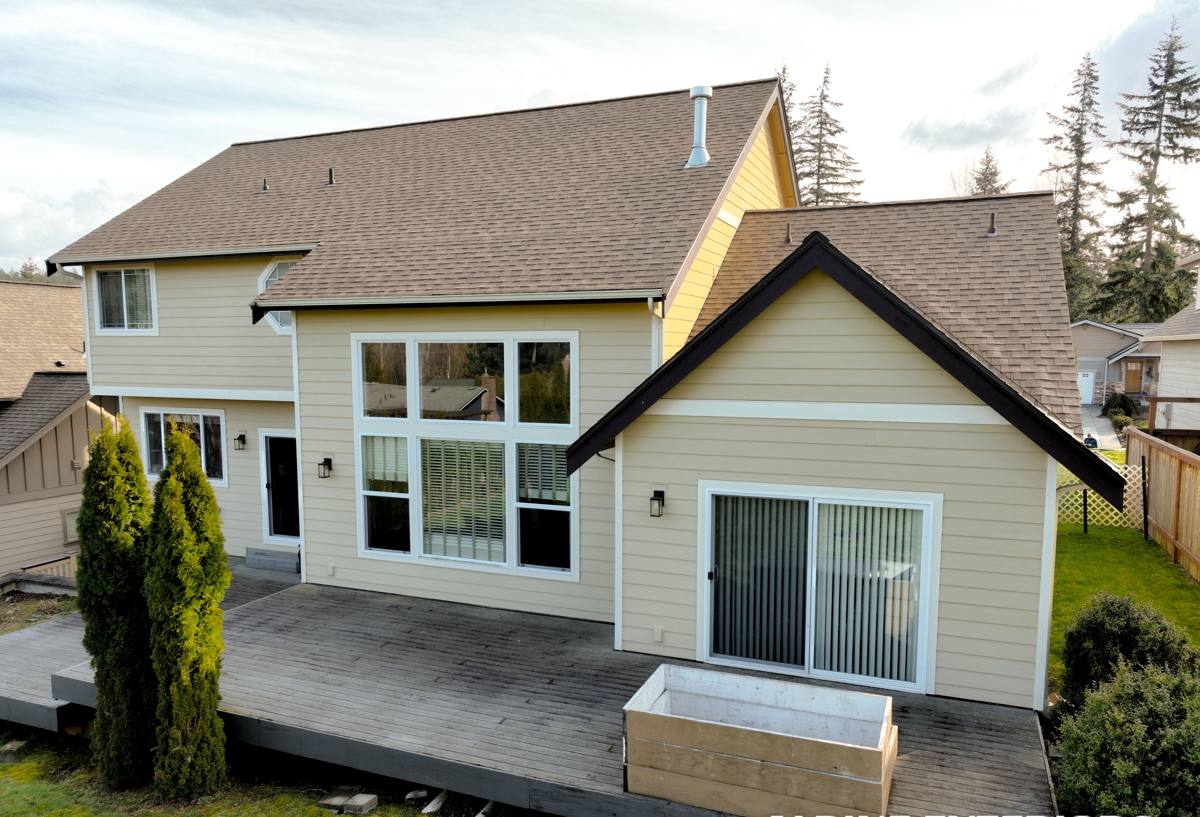
What Happy Valley's Climate Does to a Roof
Three conditions drive almost every roofing problem we get called out for in this neighborhood:
Salt Air
Proximity to the bay means airborne salt settles on roofing materials and accelerates corrosion of exposed metal — flashing, fasteners, vent caps, and gutter hardware. Standard galvanized fasteners and thin-gauge flashing corrode faster here than they would on a roof twenty miles inland. It's a slow process, but it's steady, and it's one of the first things we check on an older roof.
Driving Rain
Bellingham gets a lot of rain, but it's the wind-driven rain off the water that causes the real damage. Rain that hits a roof at an angle gets pushed up under shingle tabs, into nail lines, and along flashing edges in a way that straight-down rain never does. Roofs built to a bare-minimum spec — standard nailing patterns, minimal underlayment, undersized flashing — tend to show leaks at valleys, chimneys, and low-slope transitions within the first decade in a wind-driven-rain environment.
Moss and Shade
A lot of Happy Valley lots have mature tree cover, which is great for privacy and terrible for roof longevity. Shaded roof sections stay damp for days after a storm instead of drying out in an afternoon of sun. That moisture is exactly what moss needs to get established, and once moss takes hold it lifts shingle edges, holds water against the shingle mat, and works its way under tabs and flashing. A moss season here effectively runs most of the year, not just a few wet months.
How These Conditions Show Up as Damage
- Granule loss along the south and west-facing slopes exposed to wind-driven rain, thinning the shingle's UV and weather protection layer
- Moss colonies on north-facing and shaded slopes, especially near roof valleys and under overhanging branches
- Corroded fasteners and flashing around chimneys, vents, and roof-to-wall transitions, more pronounced the closer a home sits to the water
- Soft or delaminating decking under long-term moss growth or repeated valley leaks that went unnoticed
- Curling or lifted shingle tabs where wind-driven rain has worked underneath the seal strip over multiple seasons
What a Correctly Built Asphalt Shingle Roof Includes Here
A roof built for Happy Valley's conditions isn't a different product than a standard asphalt shingle roof — it's the same product installed with attention to the details that matter most in a wet, shaded, salt-air environment.
Underlayment
We use synthetic underlayment as a baseline and add self-adhered ice-and-water membrane at vulnerable points — valleys, eaves, around chimneys and skylights, and any low-slope section — rather than relying on felt alone across the whole deck. This is the layer that keeps a roof dry when wind-driven rain gets past the shingles themselves.
Flashing and Fasteners
Given the salt air, we favor corrosion-resistant flashing and fastener materials over the cheapest available option. It costs a little more up front and pays for itself by not needing replacement at year twelve when the original galvanized flashing starts rusting through.
Ventilation
Balanced intake and exhaust ventilation keeps the underside of the roof deck dry and reduces the temperature swings that shorten shingle life. On shaded Happy Valley lots, good ventilation also helps the roof deck dry out faster after a storm, which matters directly for moss prevention.
Shingle Selection
We generally steer homeowners toward algae-resistant shingle lines (shingles with copper or zinc granules blended in) for any home with shade exposure or moss history. It's not a guarantee against moss forever, but it meaningfully slows regrowth compared to a standard shingle in the same conditions, which matters when a shaded roof stays damp most of the year.
Shingle Options at a Glance
| Shingle Type | Typical Lifespan | Best Fit for Happy Valley |
|---|---|---|
| 3-tab asphalt | 15-20 years | Budget-conscious projects on sunnier, less-shaded lots |
| Standard architectural (laminate) | 25-30 years | Most homes; good wind rating for driving-rain exposure |
| Algae-resistant architectural | 25-30 years | Shaded lots, north-facing slopes, prior moss issues |
| Premium/designer laminate | 30+ years | Homeowners prioritizing longevity and appearance over lowest upfront cost |
Our Process for a Happy Valley Roofing Project
1. On-Site Assessment
We walk the roof and the attic, not just one or the other. Attic inspection tells us about ventilation, past leaks, and deck condition that isn't visible from the ground. We also look at tree cover and drainage patterns specific to the lot, since those drive how the roof will perform once it's installed.
2. Written Scope and Estimate
You get a clear, itemized scope covering tear-off, deck repair allowances if needed, underlayment type and placement, flashing materials, shingle selection, and ventilation work — no vague line items.
3. Tear-Off and Deck Inspection
Full tear-off lets us actually see the deck rather than roofing over hidden rot or soft spots, which is common on older Happy Valley roofs that have carried moss growth for years without anyone getting up there to look.
4. Installation
Underlayment, flashing, and shingles go in following manufacturer specs and the wind/moisture details described above — not the bare minimum needed to pass a quick visual check.
5. Final Walkthrough
We review the completed work with you, including ventilation, flashing points, and any maintenance recommendations specific to your lot's shade and drainage.
Repair, Maintenance, or Replacement?
Not every roofing call in Happy Valley ends in a full replacement. We'll tell you honestly which category your roof falls into:
- Repair — isolated flashing failures, a handful of damaged shingles, or a localized leak on an otherwise sound roof with useful life left
- Moss treatment and maintenance — moss present but the deck and shingle mat underneath are still in good shape; a cleaning and prevention plan can extend the roof's life without replacement
- Replacement — widespread granule loss, multiple leak points, soft decking, or a roof already past its expected service life for its type and exposure
Moss removal on an older roof deserves a caution: pressure washing or aggressive scraping can strip granules and shorten the shingles' remaining life more than the moss itself was. We use low-pressure methods and treatments appropriate to the shingle's condition, and we'll tell you plainly if a roof is too far gone for moss treatment to be worth the cost.
Maintenance That Actually Helps in This Neighborhood
- Trim back overhanging branches to let more sun and air reach shaded roof sections
- Keep gutters and valleys clear of needles and leaf debris that trap moisture against the shingles
- Have moss addressed early, before it lifts shingle tabs or works into fastener lines
- Schedule a roof and attic check every couple of years, especially after a hard windstorm off the water
- Watch for granule buildup in gutters, which signals accelerated shingle wear
Why Local Experience Matters for This Job
Asphalt shingle installation looks similar everywhere on paper, but the details that make a roof last in Happy Valley — flashing material choice near salt air, underlayment placement for wind-driven rain, ventilation and shingle selection for shaded lots — come from actually working roofs in this specific environment, not from a generic install checklist. A crew that hasn't worked this area regularly may not think twice about standard fasteners or minimal valley protection, and that shortcut tends to show up as a callback five or ten years later.
We work throughout Bellingham and Whatcom County, and Happy Valley's mix of shade, moisture, and coastal exposure is a pattern we recognize on sight. That familiarity shapes the material choices and installation details we recommend from the first walkthrough.
Get a Free Estimate
If your Happy Valley roof is showing moss, granule loss, or you're just due for an honest assessment of where it stands, we're glad to take a look. Reach out using the form below for a free, no-pressure estimate — we'll tell you straight whether you need a repair, a maintenance plan, or a full replacement.