 Bellingham Siding
 Roofing in Columbia: A Different Kind of Wear
Columbia sits close enough to Bellingham Bay that the air itself becomes part of your roof's maintenance schedule. Add in Whatcom County's long stretch of wet months and the mature tree canopy common in this part of town, and you've got a shingle roof that's working harder than one out in a drier, more open part of the county. None of that means asphalt shingles are the wrong choice for a Columbia home — they're not. It means the installation and the material grade need to match the actual conditions, not a generic spec sheet.
This page is about that one job — asphalt shingle roofing — done right for this one neighborhood. Not a general roofing overview, and not a sales pitch for a product you don't need.
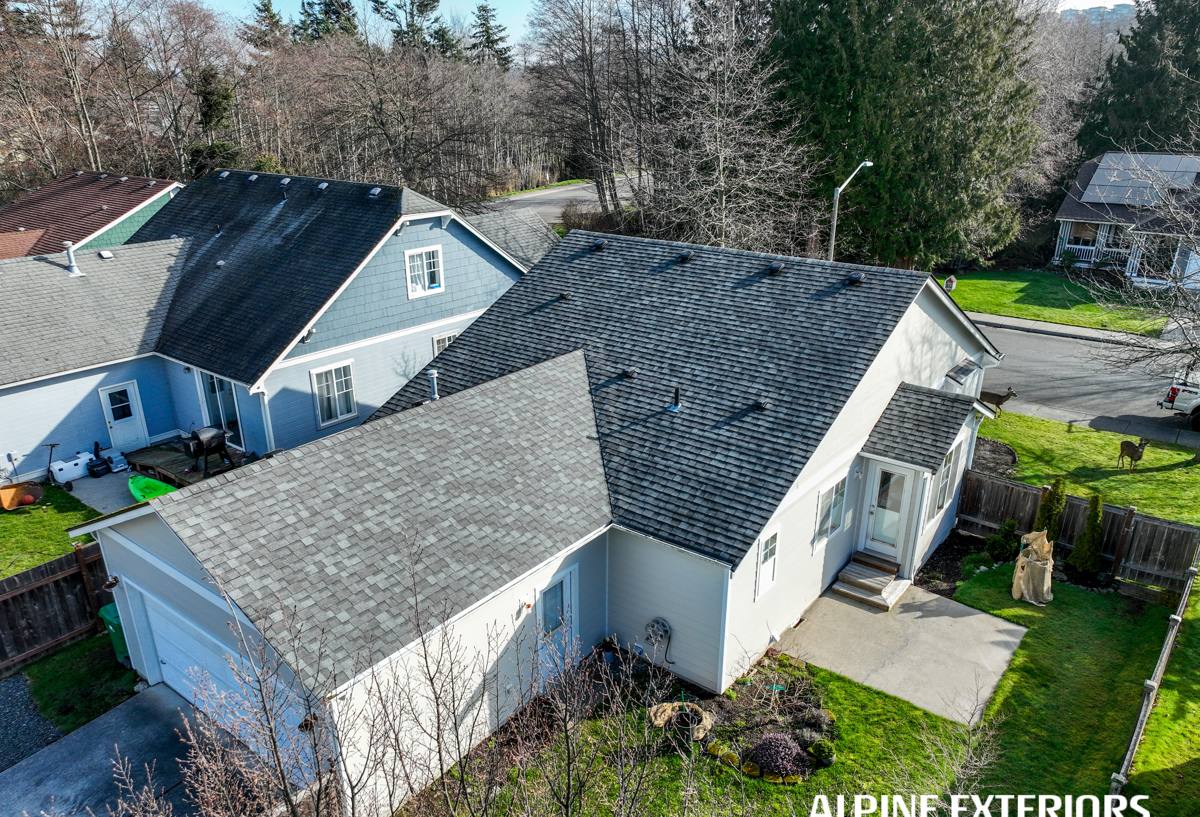
What the Climate Actually Does to a Shingle Roof Here
Three things define roofing wear in Columbia, and they compound each other:
- Salt-tinged air off the bay accelerates corrosion on exposed metal — nail heads, flashing edges, gutter fasteners, and drip edge — faster than it would inland.
- Driving rain off Pacific storm systems doesn't just fall straight down; wind-driven rain gets pushed sideways and upward under shingle tabs, valleys, and flashing laps that aren't sealed correctly.
- A long moss season — realistically much of the year in this part of Washington — means shaded, north-facing, and tree-covered slopes stay damp longer between dry spells, giving moss and algae time to establish.
Individually, any one of these is manageable. Together, they're why a roof built to a bare-minimum spec in Columbia tends to show problems years before an identical roof in a drier climate would.
Where Columbia Roofs Actually Fail First
Most premature shingle roof failures we see in this neighborhood trace back to a handful of repeat offenders, not random bad luck:
- Moss mats holding moisture against the shingle surface, lifting tabs and accelerating granule loss
- Valley flashing that was sealed with caulk instead of properly lapped and integrated with underlayment
- Corroded or undersized drip edge letting water track back under the first course at the eaves
- Poor attic ventilation trapping moisture that condenses on the underside of the roof deck
- Nail patterns that miss the manufacturer's specified nailing zone, leaving shingles prone to wind lift during storms
Notice that none of these are really about the shingle brand. They're about installation discipline — which is exactly where a rushed or unfamiliar crew cuts corners without it showing up for a year or two.
What a Correct Asphalt Shingle Installation Involves
Tear-Off and Deck Inspection
We don't install new shingles over old ones, and we don't recommend it for this climate. A full tear-off lets us actually see the roof deck — check for soft spots, delamination, or old skip sheathing common in older Columbia homes — and fix problems before they're buried under a new roof for another 20-plus years.
Underlayment and Ice-and-Water Protection
A synthetic underlayment goes down across the full deck, with self-adhered ice-and-water membrane at the eaves, valleys, and any roof penetration — the exact spots where wind-driven rain and moss-trapped moisture cause the most trouble. This isn't an upgrade; for this neighborhood's exposure, it's the baseline.
Ventilation Balance
Intake at the soffits and exhaust at the ridge need to work as a matched system. Get this wrong and moisture from daily living gets trapped in the attic, condenses on the deck, and rots it from underneath — a problem that has nothing to do with the shingles themselves but will void their warranty and shorten their life anyway.
Flashing and Edge Detail
Step flashing at walls and chimneys, properly lapped valley metal, and corrosion-resistant drip edge along the eaves and rakes. In a bay-adjacent neighborhood, we lean toward metals and fasteners with better corrosion resistance than the minimum code allows, because the salt air will find the weak link.
Nailing and Manufacturer Spec
Every shingle line has a specified nailing zone and pattern for a reason — it's what the wind-warranty is actually based on. We follow it exactly, every course, rather than treating it as a suggestion.
Choosing the Right Shingle for This Neighborhood
Not every asphalt shingle is built with algae and moss resistance in mind, and in a neighborhood like Columbia that matters more than the color or the brand name on the wrapper.
| Shingle Type | Typical Lifespan | Moss/Algae Resistance | Best Fit For |
|---|---|---|---|
| 3-tab (standard) | 15–20 years | Low unless treated | Budget re-roofs, low-slope accessory structures |
| Architectural / dimensional | 25–30 years | Moderate to good with AR granules | Most Columbia homes — best balance of durability and cost |
| Algae-resistant (AR) upgrade | Same as base shingle | Best available | Shaded, north-facing, or tree-covered roof slopes |
Algae-resistant shingles use copper or zinc granules woven through the surface that slowly release trace amounts of metal, which discourages the blue-green algae that causes those dark streaks and gives moss less to grip. Given how much of the year this area stays damp, we consider AR granules a practical baseline for Columbia roofs rather than an optional upgrade — the cost difference is small compared to the maintenance it saves.
What Drives the Cost of a Columbia Re-Roof
| Factor | Why It Matters Here |
|---|---|
| Roof pitch and access | Steeper or harder-to-reach roofs take longer and need more safety setup |
| Deck condition | Rot from past moisture or ventilation problems means plywood replacement before shingles go on |
| Number of valleys and penetrations | Each one needs flashing work — more complexity, more labor |
| Shingle tier chosen | 3-tab vs. architectural vs. AR-upgraded changes material cost and long-term maintenance |
| Tear-off layers | Removing two old layers of roofing costs more in labor and disposal than one |
We won't quote a Columbia roof off a satellite photo — pitch, deck condition, and existing flashing details all change the number, and they only show up on an actual walk of the roof.
Our Process, Start to Finish
- On-site inspection — we get on the roof, check the deck, ventilation, flashing, and moss/algae extent, not just the shingle surface
- Written estimate — a clear scope covering tear-off, deck repair allowance, underlayment, shingle tier, and flashing details, so there's no vague "and materials" line item
- Tear-off and deck prep — old roofing removed, deck inspected and repaired as needed
- Underlayment, flashing, and shingle installation — done to manufacturer spec, not just code minimum
- Cleanup and walkthrough — magnetic sweep for nails, debris hauled off, and a walk of the finished roof with you before we call it done
Why a Crew That Already Works Columbia Matters
A roofing crew that's worked this part of Bellingham already knows the questions to ask before the tear-off starts: what the older decking in this area tends to look like once you pull the shingles, how much moss buildup is normal for a shaded slope near the water versus a sign of a bigger drainage problem, and which flashing and fastener grades actually hold up against the salt air instead of just meeting the minimum code requirement. That's the difference between a crew learning the neighborhood on your roof and one that already knows it going in.
It also matters for permitting and inspection — working with the City of Bellingham's process on a routine basis means fewer surprises on timeline, not a first-time learning curve on your project.
Keeping Your Roof Healthy Between Installs
A correctly installed roof still needs some basic upkeep in this climate, especially on shaded or tree-covered slopes:
- Have moss physically removed rather than just treated — chemical treatments alone don't clear existing growth
- Keep gutters clear so water isn't backing up under the eave during driving rain
- Trim back overhanging branches to cut down on shade and debris buildup on the roof surface
- Have an annual visual check of flashing, valleys, and vent boots — small gaps are cheap to fix before they leak
- Watch for granules collecting in gutters, which signals a shingle surface that's aging faster than expected
None of this replaces a correct installation — it just protects the investment once it's in place.
If your Columbia roof is showing moss, granule loss, or you're just due for a straight answer on where it stands, we're happy to take a look. The estimate is free, there's no pressure attached to it, and you'll get a clear breakdown of what your roof actually needs — use the form below to get on the schedule.